These short articles are written to highlight the plants, history and lore of the Eloise Butler Wildflower Garden to past and contemporary events and may include personal commentary of the writer, not necessarily related to the Wildflower Garden. A web of present and past events.
February 2026
Articles
A few days remain to see the Florilegium exhibit
Time to pre-order your native plants for spring
Native wildflowers too tall - shorter recommendations
Veronika: More about animals and tools
World climate records - a chart
A few days remain to see the first 2026 Florilegium exhibit
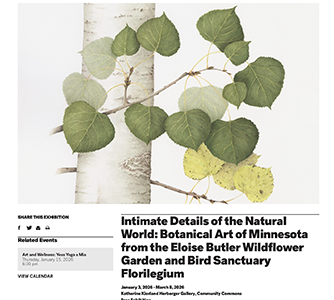
Twice this year you will be able to see the drawings of plants in the Eloise Butler Wildflower Garden that were created for the Eloise Butler Wildflower Garden Florilegium Project which wrapped up in 2025 with 111 completed drawings.
The first exhibit now at the Minneapolis Institute of Arts has a limited display of the works in the Institute Commons area. This closes on March 8. Coming this fall at the Universities Bell Museum will be an exhibit of the entire collection. Dates to be announced.
History of the Florilegium project.
Time to pre-order your native plants for spring
Thinking about spring planting? Some of the major nurseries that grow and sell native plants to the public are now open for pre-season orders for spring delivery. Bare root plants are generally available in early to mid April, but limited to availability so it’s first come-first served. First year seedlings are generally available in May and later. Ordering preferred plants is a case where “it’s never too late” does not apply.
Native wildflowers too tall - shorter recommendations
Native wildflowers too tall? Neighbors don’t like them? We present a brief selection of not-so-tall natives that are well-behaved, colorful and can be fit into many different spaces and all benefit pollinators.
Furthermore they are not really tall plants, do not need complete summer shade protection, in fact the majority prefer full sun. Use the links to read more about each plant.
Jacob’s Ladder (Polemonium reptans). Blue-violet flowers on panicles, spring to early summer, pinnately divided leaves, prefers light shade after flowering, spreads a bit by seed, generating more plants for you. (photo G D Bebeau)

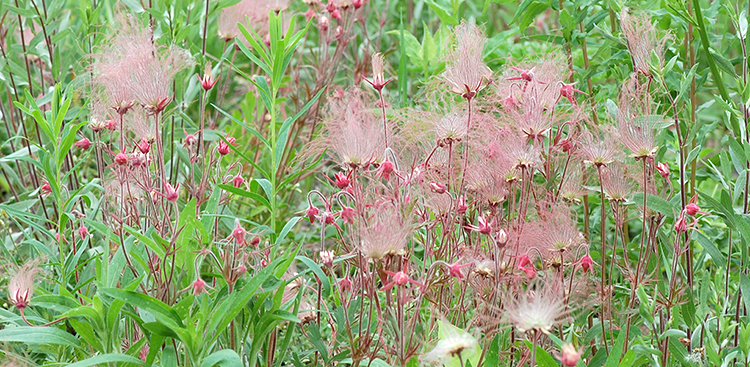
Prairie Smoke (Geum triflorum). Pink to purplish flower heads that form neat seed heads that look like smoke plumes or as Eloise Butler said “a lovely claret-colored ball of gossamer plumes.” Low growing, 4 to 12” high, leaves in a rosette. Forms small colonies from the roots. Early to late spring. (photo G D Bebeau)
Purple Coneflower (Echinacea purpurea). Pink to purple rays, up to 5 feet high but if height is the big issue, they are available in cultivars that grow only to 2 feet high. Blooms early summer to autumn, tolerates some shade. (photo G D Bebeau)

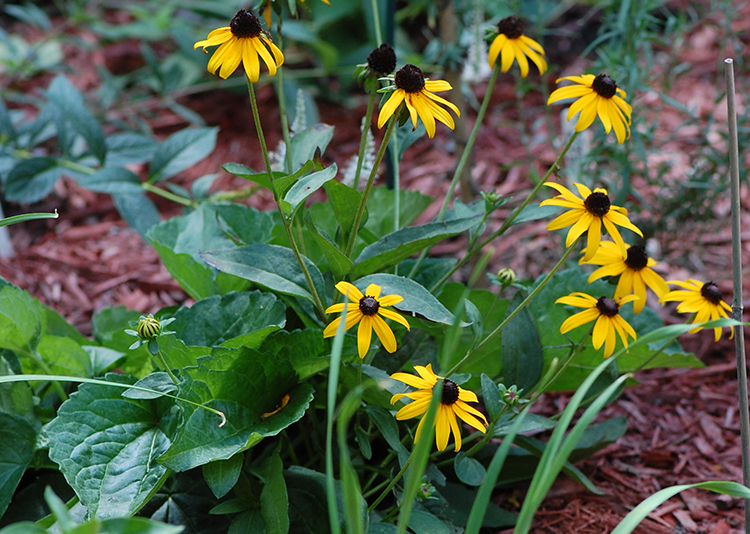
Orange Coneflower (Rudbeckia fulgida). Orange-yellow rays on the flowerhead. Of all the coneflowers this species is the shortest, the dark green leaves stay in a low clump with flower stems rising to around 2+ feet. Tolerates some shade part of the day, but best in full sun. The plant clump expands every year, so you can divide and move if you desire more plants. Blooms early to late summer. (photo G D Bebeau)
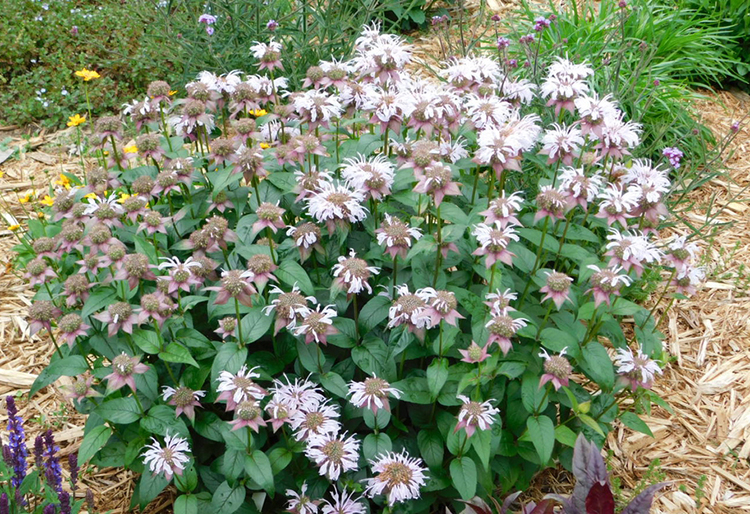
Bradbury’s Monarda (Monarda bradburiana). Monarda are real attractors of bees, butterflies, humming birds for their copious quantities of nectar. This one is short, 1 to 2 feet high, forms clumps of stems with pinkish-white flowers resembling the more familiar wild bergamot, Monarda fistulosa. It blooms earlier than the other monardas. Formerly restricted to warmer climate zones it now can handle southern MN. (Photo K.Andre CC BY 2.0)
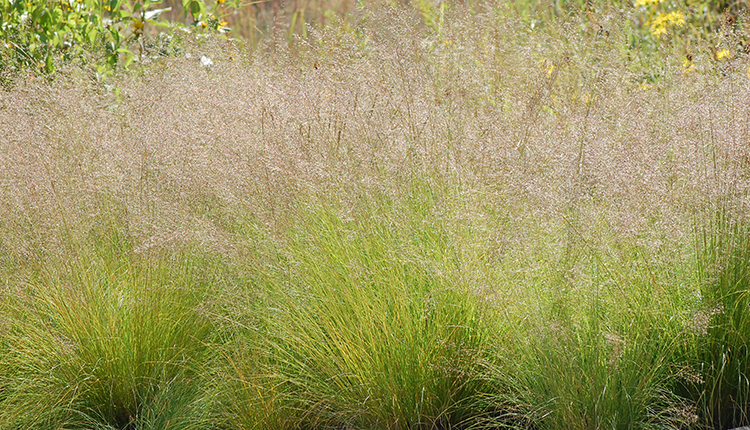
Prairie Dropseed (Sporobolus heterolepis). This, the first of our two recommended short grasses, forms a clump of leaves that form a cascade shape 1 to 2 feet high with the late summer flowering stems rising another foot. Very controlled with the clump enlarging a bit every year. (photo G D Bebeau)
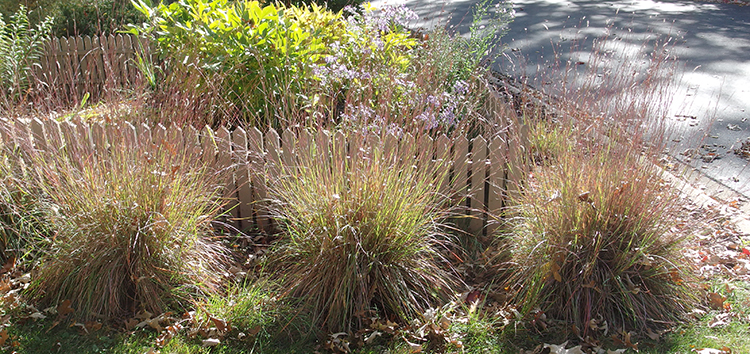
Little Bluestem (Schizachyrium scoparium). This short cousin of big bluestem is great for late summer and fall color. For controlled shape and height you need to plant a cultivar, such as BlueHeaven™, illustrated here in flower but not yet changed to fall reddish. The leaf blades grow upright, 15 to 30 inches and cascade with the flowering stems growing taller in late summer. The flowering stems are particularly colorful in bloom and the entire plant takes on a reddish cast in the fall. (photo G D Bebeau)
Both grasses make excellent borders.
Veronika: More about animals and tools
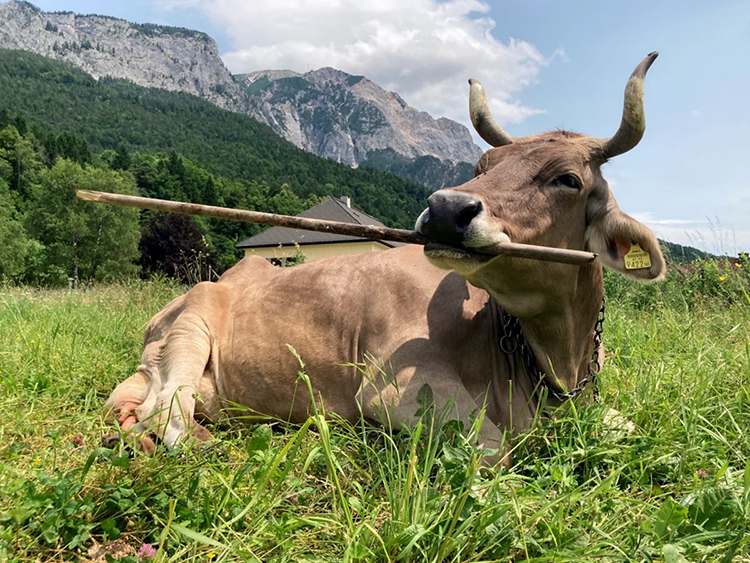
You may have seen the video clip on nightly news shows of Veronika the cow using a tool to scratch her back, in this case a bristle brush that she learned to use.
This further extends the discussion of what we think about how animals use tools. Veronika uses her mouth to manipulate the brush bristles to scratch her hide but if she has an itch on her tender udder, she uses a stick without the bristles. Smart girl. (Photo Antonio-J-Osuna-Mascaro)
A word about groundhogs
It matters not whether Punxsutawney Phil saw his shadow or not earlier this month, as the prediction is no better than chance. Those who emerge early are usually males looking for a mate, but groundhogs (Marmota monax) do have some interesting characteristics.
If you run across one of the resident groundhogs in the Eloise Butler Wildflower Garden, here are some things to know about these largest members of the squirrel family:
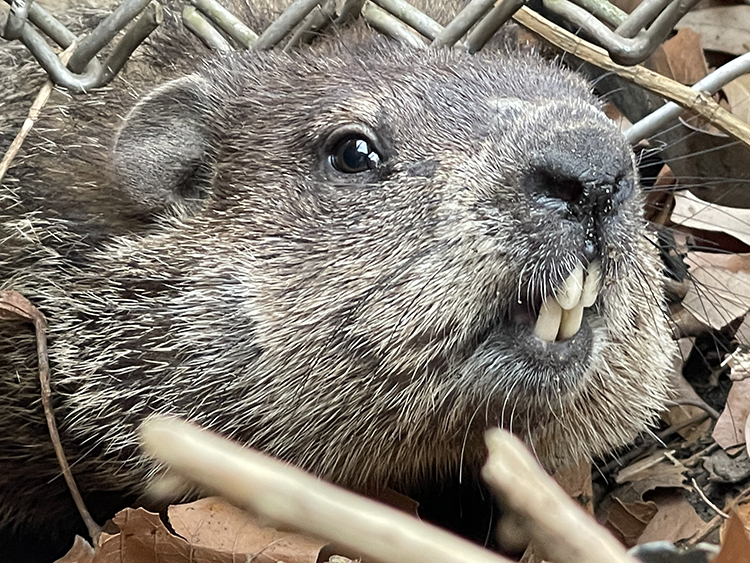
1. Like beavers, the teeth never stop growing and they have to gnaw on things, which is probably why one dug a hole through the Wildflower Garden office wall in 1939. (photo below by Mousebelt CC BY-SA 4.0)
2. The burrow, starting with just a hole, will have multiple chambers and tunnels, other entrances, and as you may expect, creating some havoc with the landscape and root systems above. In our Minnesota climate, the winter burrow for hibernating will extend below the frost line. One lived under the Wildflower Garden restroom and in 2007 the shingles on the back outside wall had to be repaired when an animal, probably a dog, was rooting to get at the woodchuck burrow.
3. Animal worlds archeologists: In digging burrows they sometimes come across historical artifacts that leads humans to examine and reclaim some of the past. Two cases in the United States are the the Mary Street Midden Project in Louisville Kentucky and the National Landmark Meadowcroft Rockshelter in Avella Pennsylvania.
4. The groundhog version of hepatitis B (HBV) is very similar to the human version, which means they are the best available animal used in helpful research in human liver disease.
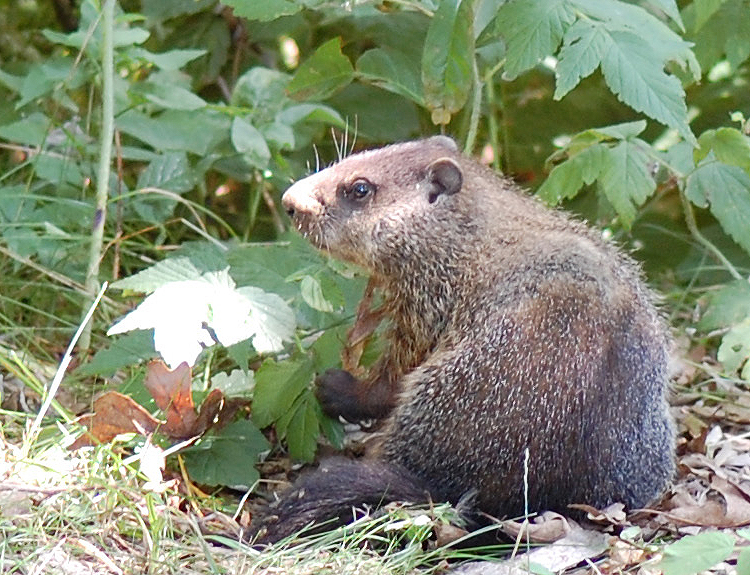
5. Like plants that inhabit wide areas of the country, they have acquired many common names - groundhog, woodchuck, whistlepig, land beaver, Monack, etc. The young are called “chucklings.” (photo below G D Bebeau)
World climate records - a chart
In 2025 world climate was the 3rd highest hottest year on record, with 2023, 2024 and 2025 being the top three. The year 2024 actually exceeded the benchmark 1.5 degrees Celsius above preindustrial levels. This chart tells the story.
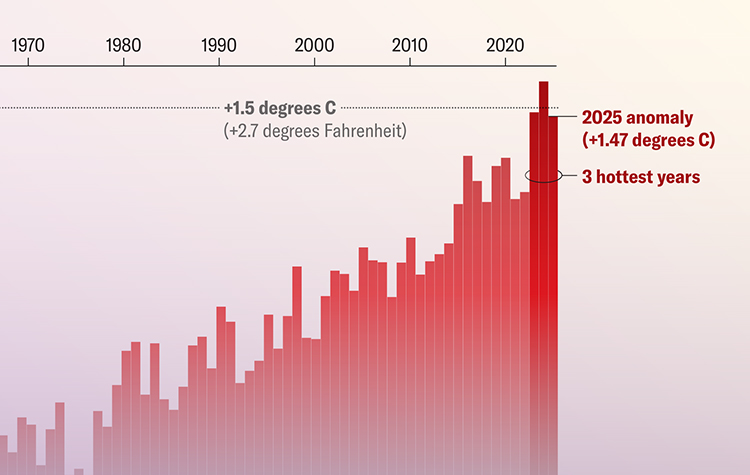
Chart - Amanda Montañez; Source data - EU Copernicus Climate Change Service
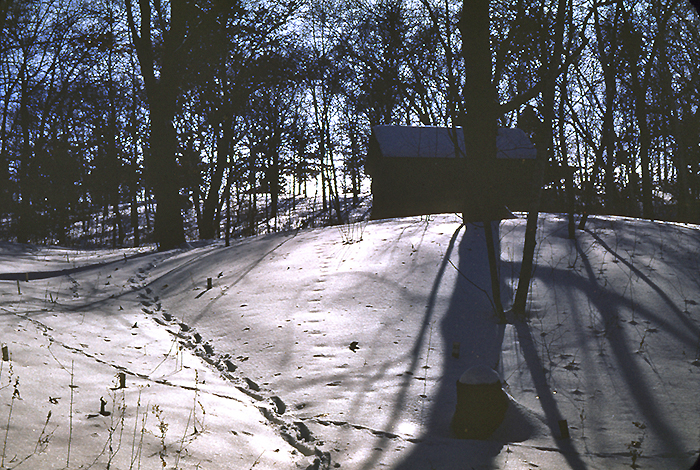
Historical Photo
The east woodland path in the Wildflower Garden leading up to the Garden office on February 18, 1953, from a Kodachrome by Martha Crone. Photo ©Friends of the Wildflower Garden.