
A PUBLICATION OF FRIENDS OF THE WILDFLOWER GARDEN, INC.
Fall 2026
Volume 74 No 3
Print version
Downloadable PDF of printed copy
Quick Links to this Issue
Feature articles
The Devil's Glen - A Brief History of Birch Pond
The Curious Bladderworts of Birch Pond
News & Notes.
•An exceptional and unexpected gift
•Tracking Garden visitors
What's going on!
Friends President's Letter - celebrating 175 years
Wildflower Garden is home to dozens of rare MN-native plants
This issue featuring Birch Pond
The Bryozoans of Birch Pond
by Keygan S. S. McClellan
July 2025: MPRB water quality staff, conducting a rare survey of Birch Pond, clamber past the stormwater outfall near Theodore Wirth Parkway, reaching the only place along the shoreline not choked by cattails and buckthorn.
They throw a metal-pronged garden rake on a rope into the glittering water, and when they haul it back, a sample of submerged vegetation comes with. Sorting through the soggy mass of aquatic plants, they find an impressive diversity of species as well as a surprise: a mud-colored, translucent, gelatinous blob. A freshwater bryozoan colony!
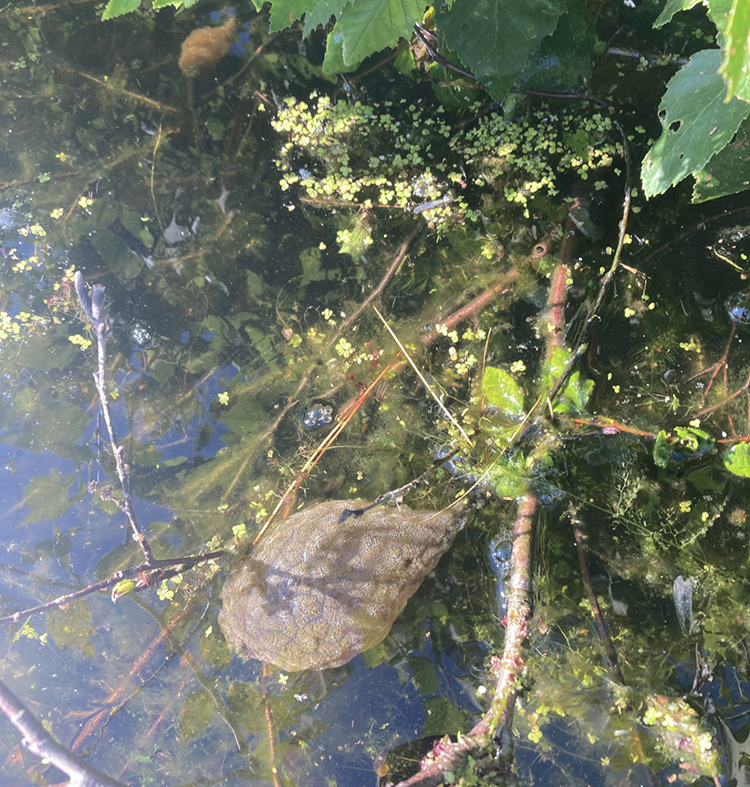
Above: What looks like a deflated brownish ball is a colony of freshwater bryozoans. Each dot in the bryozoan colony is the home of an individual organism. Photo Rachael Crabb, MPRB
Bryozoan colonies start appearing, like the ghosts of forgotten beachballs, in lakes and ponds at the end of summer, attached to the shady sides of submerged objects. Their surfaces are lumpy but, when viewed under magnification and left undisturbed, ripple with flower-like creatures. Behind their understated appearance, they’re hiding some fascinating secrets, and their presence is a good sign for the health of Birch Pond.
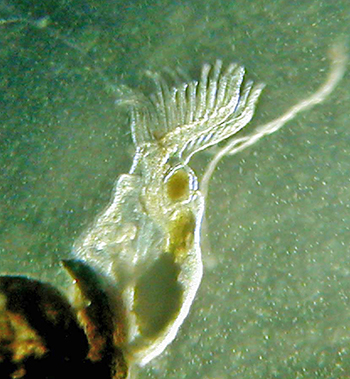
Freshwater bryozoans belong to the class Phylactolaemata, meaning “guarded throat,” in the phylum Bryozoa, meaning “moss animal.” Bryozoans have a rich history here. During the Ordovician Period, from about 485 – 444 million years ago, a shallow ocean lapped at the land that would become Minnesota. In these sparkling waters, it is thought the first bryozoans evolved while plants first crept onto land. Sediment accumulated along the sandy shorelines, eventually compacting into the bedrock that underlies Minneapolis today. Nowadays, bryozoan fossils can be found sprinkled in local limestone and shale, while living bryozoans are rarer (the plants, meanwhile, proved wildly successful).
All bryozoans are colonial animals. Individuals are called zooids; they are tube-shaped and delicate, capped by a crown of tentacles used to filter food particles from the water. Each zooid secretes a protective, gelatinous casing, and as new zooids bud from and grow atop the old, their secretions gel together, eventually forming a sort of “jelly reef.” In some species, the colony can swell to 6 feet across, but most are smaller.
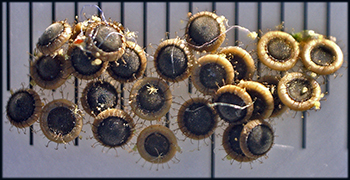
The bryozoan life cycle is less a cycle and more a branching path. In a single colony, most zooids are budded clones. Zooids also sexually reproduce from May to July, releasing free-swimming larvae which can settle to form new colonies. Additionally, to ensure their descendants survive winter, zooids have a third option: a cloned mass of cells enclosed within a shell, called a statoblast. The statoblast, like a seed, remains dormant in harsh conditions and opens in favorable ones.
Bryozoans are strange and ancient and also a good sign for Birch Pond! They are often an indicator of healthy habitat, as most species require oxygenated, unpolluted waters free of silt. These conditions can be elusive in the still or slow-moving waters bryozoans favor. Although little is known about Birch Pond’s water quality, we do now know that, despite invasive plants and runoff from the Parkway, the pond can support sensitive animals like bryozoans. Birch Pond, home of herons, dragonflies, water lilies—and gelatinous blobs—is surely one of Wirth Park’s hidden gems. ❖
Keygan S. S. McClellan is a naturalist at Eloise Butler Wildflower Garden.
The Devil's Glen - A Brief History of Birch Pond
by Gary Bebeau
It was described as “a pretty land-locked sheet of water at the foot of a steep, beautiful, birch covered hillside.”1 But the name would never do. Early local records and newspapers from the late 1800s/early 1900s referred to the densely wooded ravine as “Devil’s Glen”and the pond as “Devil’s Mirror.”
We are fond of associating the devil with places hard or dangerous to access. No doubt that’s why Lieutenant James L. Thompson named the high ridge at Loring Park the “Devil’s Backbone” on his 1839 survey map of the Fort Snelling Military Reservation. When the new picturesque Glenwood Parkway was being built to curve around this pond, something more “noble” would be needed. Thus Devil’s Glen became Birch Pond on January 27 1910.2
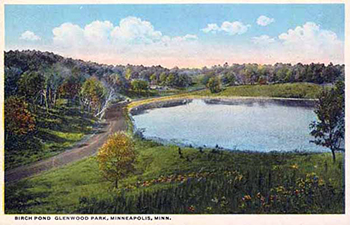
The pond, the Wildflower Garden and all of Wirth Park lie on or quite near the ancient stream bed of the Interglacial Mississippi River. Melting ice from the last retreating ice sheet left many sunken bowls and kettles that form our old ponds and lakes. The rail lines through Bryn Mawr lie on the sand bed of that ancient stream.3 The surrounds were not as densely treed as they are today. When the parkway was built a visitor could see Glenwood Lake from the highest section of the new roadway near the pond.
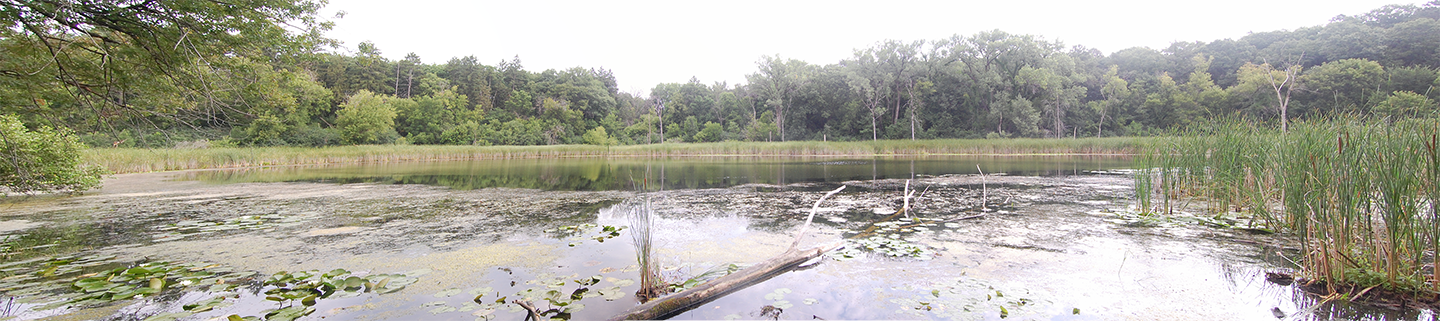
The 2.6 acre pond sits 15 feet above the level of the Wildflower Garden wetland and unlike the Garden it has no natural outlet. The water was clear and Birch Pond lay mostly undisturbed until the building of the parkway except for the fish hatchery. In 1893 the Minneapolis Board of Park Commissioners granted the State Fish Commission permission to use the isolated pond and it operated a hatchery there between 1893 and 1918.4
The only flow of water into the pond is from the parkland hillsides and one stormwater inlet from the parkway on the west side. Previously there was an active inlet on the east side from the water diversion pipeline (more about that later).
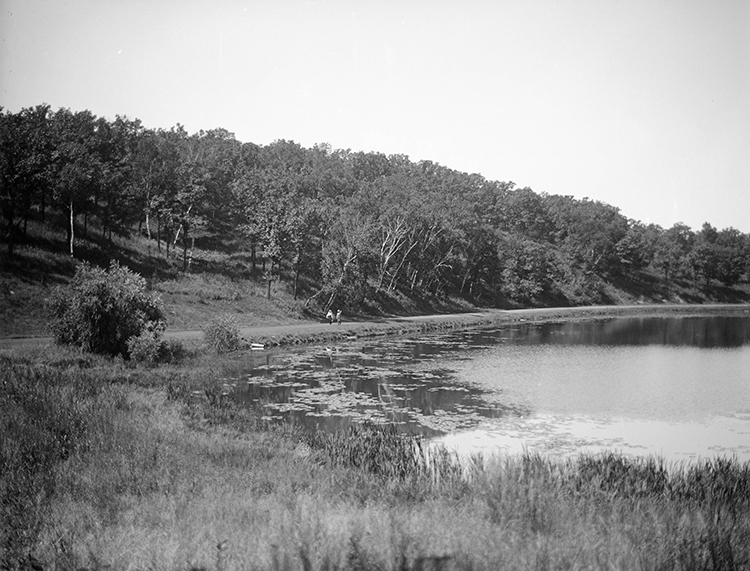
Above: A partial view of Birch Pond and the Parkway in 1916. Photo - Wm. G. Wallof.
Once the Parkway and the entrance road to the Wildflower Garden were completed in 1910 people began dumping debris on the secluded hillsides around the pond. Friends of Birch Pond Watershed, a volunteer group, was formed in 2002 and began cleaning up this debris, but the group dissolved in 2005.
Once Eloise Butler and her fellow teachers began their work in 1907, the pond was discovered to be a source of some aquatic plants for their new Wild Botanic Garden, the first sourcing from there noted in 1916; plants such as waterweed, American eelgrass, monkeyflower; slender-leaf false foxglove, sessilefruit arrowhead, strawcolored flatsedge and watersmartweed. In reverse, in 1925 Eloise Butler planted some American lotus, Nelumbo lutea, in the pond. In 1930, her volunteer assistant Martha Crone planted more of them in the pond and in the Wildflower Garden pool. A drawing of these lotus lilies hung in the Martha Crone Shelter for a number of years.5 Legacies of the pond fish hatchery were bass and perch and people fishing for them caused a serious degradation of the pond by the introduction of small goldfish used for bait. Martha Crone noted boys fishing for goldfish in the pond in 1942.
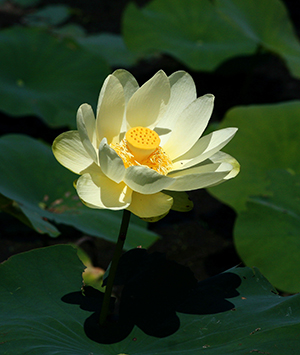
The disappearance of the lotus lilies from the pond was blamed on the introduction of those goldfish who stirred up the bottom and turned the crystal clear water muddy. In 1965 Wildflower Garden Gardener Ken Avery requested the Park Board to poison them. After nesting in the Wildflower Garden in 1939, the blue-gray gnatcatchers moved to a white oak near the pond and were seen there during the early 1940s.
On December 12, 1923 a warming fire started by skaters on Birch Pond got out of control with winds blowing embers into dry grass and leaves up into the area around the Wildflower Garden burning 2,000 evergreens that the Park Board had recently set out. It made the Star Tribune - the headline read “City’s Oldest Tree Periled by Flames in Glenwood Park” - Eloise Butler’s favorite white oak “Monarch.”
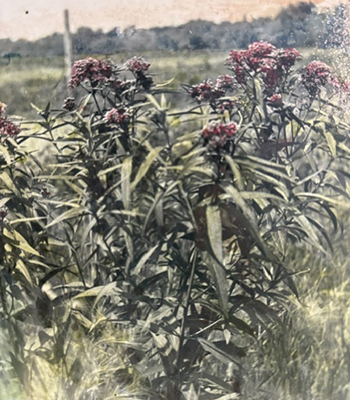
Another major pond degradation to the shoreline was when purple loosestrife was introduced, whether by accident or by planting is unknown. By 1950 the entire circumference was a ring of purple as the photo shows. In 1997 the MPRB allowed the DNR to release biocontrol beetles at the pond, which feed on and weaken loosestrife plants. By 2000 the loosestrife was too weak to flower and has not been a problem since.6

Above: Birch Pond on August 5, 1950 showing the circumference choked with purple Loosestrife. The Wildflower Garden in behind the trees in the upper background. Photo from a Kodachrome taken by Martha Crone.
The last development that affected the pond took place in 1957. To maintain water levels in the Minneapolis Chain of Lakes after years of drought a 24 inch diameter water diversion pipeline running from Bassett’s Creek was completed in 1958 ending at Brownie Lake. The diversion pipe runs under the path that bisects the old lily pond in the meadow behind the Eloise Butler Wildflower Garden and continues outside the west portion of the Wildflower Garden, then down to Birch Pond. From 1958 to 1965 an average of 2 billion liters of water per year were pumped through the diversion line. It turned out that the Creek did not have enough capacity to provide water for the line so a pumping station was installed on the Mississippi River in 1966 to put water into the storm sewer line that emptied into Bassett’s Creek.7 The system is long since decommissioned but a remnant of the old system exists on the east side of the pond and the top of the big pipe was still visible on the lily pond path behind the Garden until the path was raised and paved over in fall 2026.
The pond is still rather secluded, only the parkway gets really close to it. Walkers seem to bypass it and it remains a rather pristine body of water with the water lilies still blooming, fishing ended, and the purple loosestrife in abeyance. Long live the pond! ❖
Notes:
- 1. 28th Annual Report Board of Park Commissioners, 1910.
- 2 Minutes, June 6, 1910 Board of Park Commissioners.
- 3 Minnesota’s Rocks and Waters, George M. Schwartz and George A. Thiel; University of Minnesota Press.
- 4. 2024 Water Resources Report, MPRB.
- 5 The Fringed Gentian™, vol 19 no. 4.
- 6 Jeff Lee, The Fringed Gentian™, Vol 49 no. 3.
- 7. a) Annual Report Board of Park Commissioners, 1957; b) Dept. of Geology and Geophysics, University of Minnesota 2007.
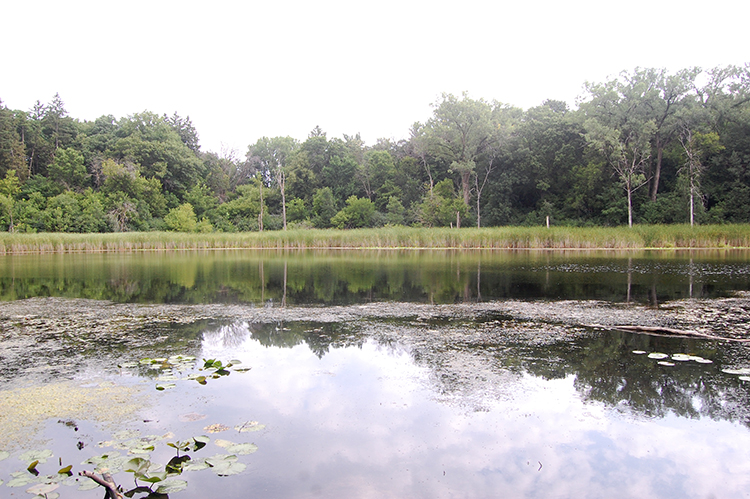
Below: Birch Pond from the western shore in summer 2026. [Larger image]. Photo G D Bebeau
Gary Bebeau maintains the Friends website and Friends histories.
The Curious Bladderworts of Birch Pond
by Colin Bartol
On a summer walk near the Eloise Butler Wildflower Garden, it is easy to be drawn toward the obvious beauties: a cardinal flower blazing red beside the water, a water lily floating serenely on the surface, or perhaps a dragonfly patrolling the shoreline. But in Birch Pond, some of the most fascinating plants are the ones that are easiest to overlook. Hidden beneath the surface are bladderworts—small aquatic plants with a remarkable secret.
Bladderworts belong to the genus Utricularia, a group of carnivorous plants found in quiet waters, bogs, ponds, and wetlands. Minnesota is home to eight species of Utricularia. The Common Bladderwort, Utricularia vulgaris, is widespread in the state and occurs in ponds and other still or slow-moving water. Its delicate underwater stems and finely divided leaves can make the plant almost invisible unless one knows where to look.
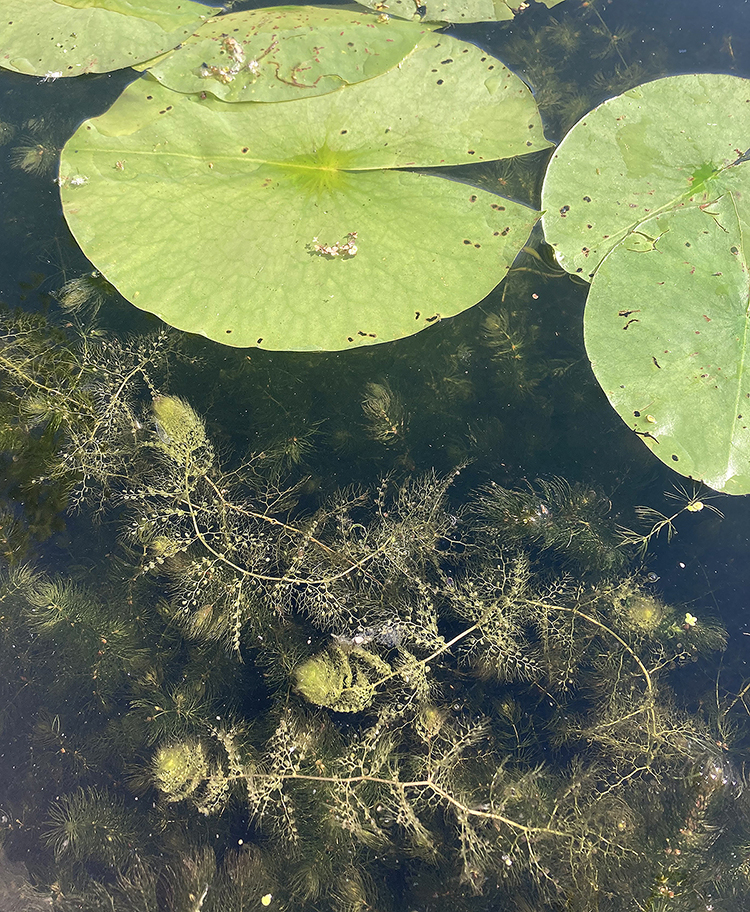
Above: Strands of bladderworts in Birch Pond. Photo - Rachael Crabb, MPRB.
The name “bladderwort” comes from its most extraordinary feature. Scattered among its threadlike underwater leaves are tiny hollow structures called bladders. Each bladder is equipped with a trapdoor. When a minute aquatic creature—perhaps a tiny crustacean or other microorganism—brushes against trigger hairs, the trapdoor suddenly opens. Water rushes inward, carrying the prey with it. The door then closes, and the plant can digest its captured meal.
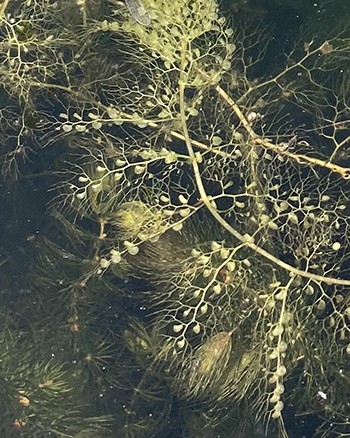
It sounds like something from a science-fiction story, but this is happening quietly beneath the surface of Birch Pond.
Bladderworts are especially interesting because they do not live like most familiar flowering plants. They have little or no conventional root system and obtain much of what they need directly from the water. Their carnivory provides nutrients that may be scarce in the environments where they grow. Yet recent observations have added an intriguing complication to the traditional story: the tiny bladders can also contain communities of microorganisms, including bacteria, algae, and diatoms. In other words, the bladder may be more than a simple trap; it can be a miniature ecosystem of its own.
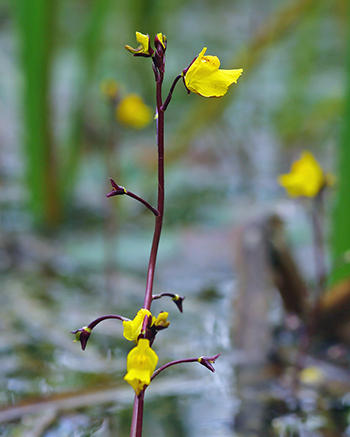
There is an especially appropriate connection between these plants and the history of the Wildflower Garden. Eloise Butler recorded planting Common Bladderwort in 1913, obtaining it from Mahtomedi, Minnesota. Her Garden Log reflects her lifelong interest in bringing together Minnesota’s remarkable botanical diversity and giving each plant an environment where it could thrive. Today, the wetlands around the Garden continue to remind us how much botanical interest can be packed into a small landscape.
The next time you stand beside Birch Pond, look beyond the surface. Bladderworts may not announce themselves with a large flower or showy foliage. When in bloom, however, their small yellow flowers rise above the water on slender stems, resembling miniature snapdragons. The flowers are a clue to the extraordinary plant working unseen below.
Perhaps that is part of their charm. Eloise Butler’s Garden has always encouraged close observation—to pause, look carefully, and discover the remarkable in places we might otherwise pass without notice. The bladderworts of Birch Pond reward exactly that kind of attention. Beneath the quiet water, an intricate world is at work: plants floating freely, tiny traps snapping shut, microorganisms inhabiting miniature bladders, and an ancient strategy for survival playing out on a scale almost too small to see.
The next time you visit the pond, take a moment to look down. There may be a carnivorous plant beneath the surface, quietly waiting for you to notice. ❖
Colin Bartol is editor of The Fringed Gentian™
President's Greeting
Celebrate 175!
by Jennifer Olson
Celebrate 175! has been a remarkable summer for the Eloise Butler Wildflower Garden. Our standup cardboard Eloise posed for many pictures at the Garden’s Visitor Center and at our State Fair Horticulture Building exhibit.
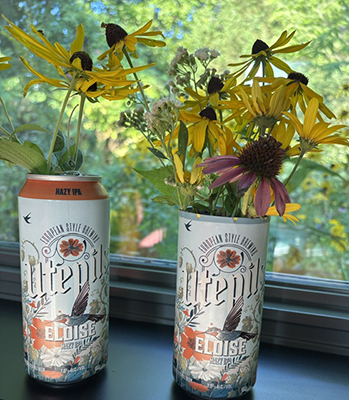
Her 175th birthday was celebrated in the Garden with festivities on Sunday, August 2nd. On Monday, August 3rd, the actual 175th anniversary of her birth, we launched the new Eloise hazy pale ale at Utepils Brewery, which was fun and well attended! The floral beer label was a real tribute to Eloise!
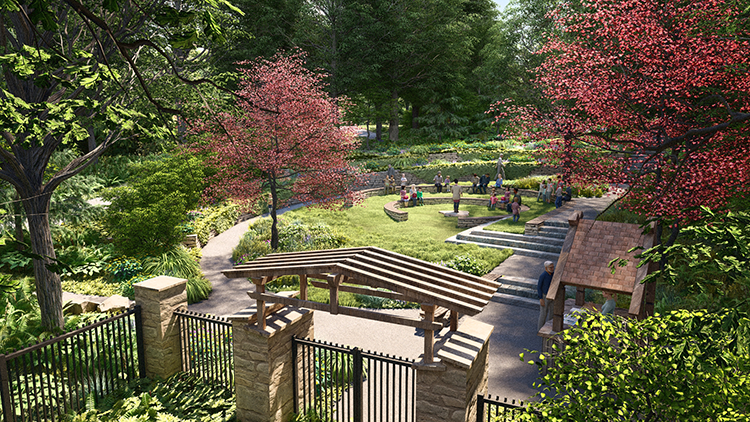
Above: Illustration of the Council Ring design for the entrance to the Wildflower Garden. Graphic by MPRB
Celebrate 175! in honor of Eloise’s special birthday has raised over $175,000, a birthday gift for Eloise and a gift for future generations !!! We will continue to accept your gifts for the Garden until November 6, as costs have increased. Your donations are to support the planned Front Entrance Project to start this fall, including building the Council Ring. A Council Ring is a circular seating arrangement designed to promote egalitarian discussion and communication among participants. It is rooted in Nordic and Native American traditions, symbolizing equality and community. The Ring will be used for education programs and also as a meeting place.
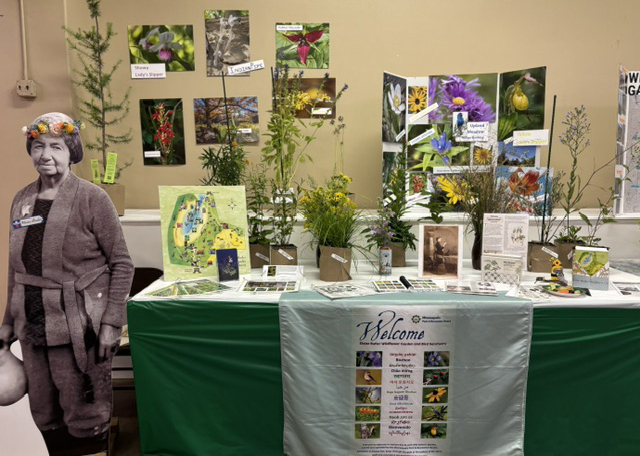
Above: The 2026 display to the Minnesota State Fair. Photo- Jennifer Olson.
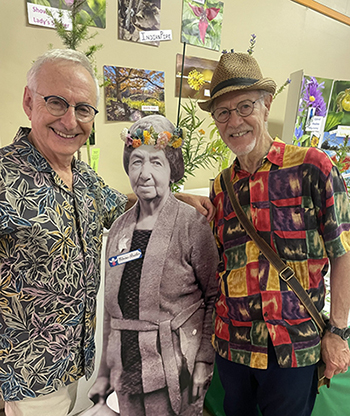
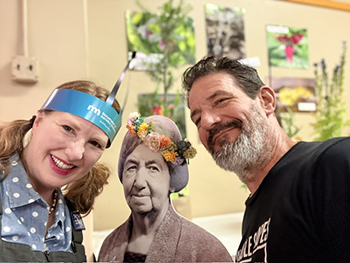
This year we hosted our 4th State Fair Horticulture Building EBWG display. All of our nine volunteers, David Harris, Ward Bauman, Pam Weiner, Brenda Kemmerick, Scott Eastman, Doug Anderson, Janet Anderson, Tim Sutton, and I returned to meet and greet the fairgoers! We decided to track the number of verbal interactions we had with people, similar to counting the encounters we have at the Kiosk and the Shelter. On September 2nd and 3rd, the volunteers engaged in conversations with 899 fairgoers! Thanks to Bob Ambler for providing us with his beautiful large prints of wildflowers from the Garden.
You and your friends and family are invited to our Celebrate 175! party at the Bell Museum on Thursday, November 5th, 5:30 - 8:30 PM. You will have the opportunity to visit the Eloise Butler Wildflower Garden Florilegium on display at the Bell, enjoy several Lightning Lectures (15 minutes each!), and socialize.
Tickets are sold on the Friends’ website: https://www.friendsofeloisebutler.org
Enjoy your fall and see the last bloom in the Garden – the witch hazel!
Jennifer Olson President of the Friends of the Wildflower Garden website: friendsofeloisebutler.org. ❖
Archive of previous President's Letters.
A Season of Beauty, Connection, and Community at the Garden
from Garden Curator Susan Wilkins
Every year, a miracle occurs when the Garden gates open for another season and people find themselves at home here, among the flowers and green trees, the birdsong and buzzing bees. All season long, they meander along the soft trails, touching into the beauty and aliveness of nature, and touching into that same beauty and aliveness within themselves.
We are but mirrors to the world around us, and what we immerse ourselves in, we become as well.
A season at the Garden teaches us about our own rhythms, weather, hues, and multitudes. Those who have been blessed to experience many seasons here are shown how similar we all are, and how deeply we need spaces like this to nourish our deepest and truest selves.
Along the way, we make friends. Not only with the plants and myriad other beings of the Garden, but also with one another. For where does community thrive more fully than in nature, where the interconnected web of life is in constant conversation and rich collaboration? We are but a note in this intricate and ever-changing song of life, and in some places, like here, we can play with our pitch, find our voice, and begin to sing along with a world that wants us to participate, that wants to hear us sing.
The Garden, perhaps above all, is an invitation to arrive and to be a part of nature.
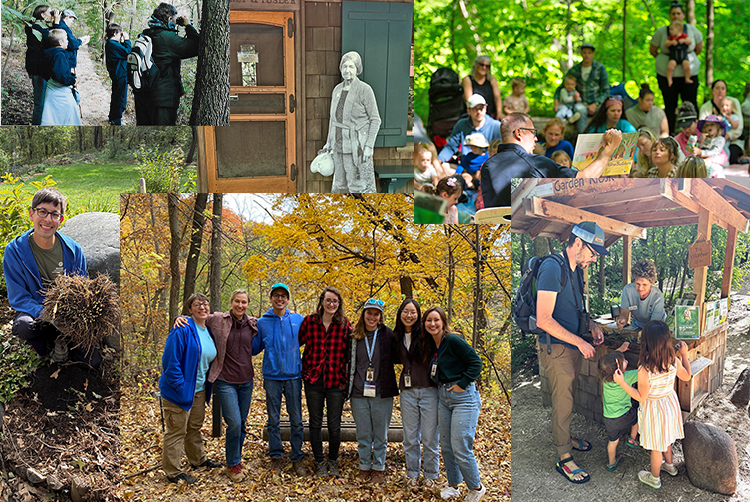
Above: Images of Garden staff, activities and visitors from recent years. Photos from MPRB and Friends of the Wildflower Garden.
And on that note, we have had quite an incredible season! Record-breaking numbers all around, incredible staff and volunteers who truly make it all possible, and so much kindness. Every day, there is an offer in the atmosphere here to be kind and connect. We are all the better for it.
As of October 4, we have guided more than 8,050 youth and adults through a wide variety of experiential nature programs this year. Wow! This is a new record for the Garden. Additionally, we have welcomed and engaged with more than 66,700 visitors since April 15. That’s more than 12,000 additional engagements compared with last season, and we still have a few weeks and weekends to go!
Two major Florilegium exhibits have taken place this season, one at MIA and another at the Bell Museum (on view through January 3). Eloise turned 175 and even had a beer named in her honor, and the Friends have raised more than $200,000 for the front entrance project, which will be underway in late October. It has been such a big, beautiful, and bountiful season here!
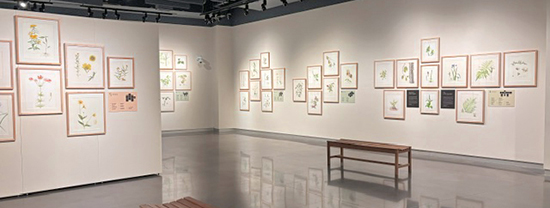
Above: A view of the exhibition room at the Bell Museum for the 2026 EBWG Florilegium exhibit. Photo J. Olson.
Our volunteers have been extraordinarily generous with their time and energy this season, both as docents and out in the field. We expect those numbers to top the charts as well by the end of the year!
Our staff—including Kimberly Ishkov, Nicholas Purcell, Debbie Keyes, Katie Laux, Linette Maeder, Keygan McClellan, Tammy Mercer, Maria Montero, Finley O’Connor, Lisset Olvera Chan, Cheyanne Rose, Natalie Holl, and Emily Scharfenberg—are each and all incredibly talented, professional, and genuinely wonderful human beings who have graced the Garden this season with their skills and presence. We are enormously fortunate to have such an incredible team of people working here.
I’m constantly in awe of the spirit of this place, how it nourishes people, and how deeply people love the Garden. May the miracle of the Garden continue to grow, blossom, flourish, and bring goodness and abundance into the world. Eloise, your Wild Botanic Garden is teaching so many people to find their song and sing it well, in the community of people and nature you began cultivating here 119 years ago.
Take good care this winter, Friends—Susan❖
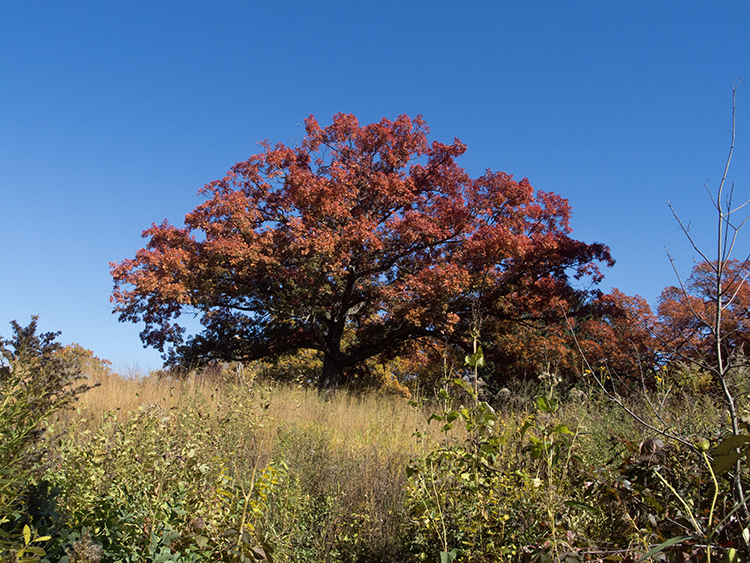
Above: The old white oak in the upland in fall color. Photo G. Bebeau.
Susan Wilkins is Curator of the Eloise Butler Wildflower Garden. Her article is courtesy of the Minneapolis Park & Recreation Board.
Read Susan's previous letters here.
News and Notes
An exceptional and unexpected gift
In the fall of 2023, the Friends received a letter that was unexpected and unusual in its content. The letter announced that the Friends were one of six charitable entities that were beneficiaries in the estate of Mary Jo Thorsheim. Unexpected in that we were not acquainted with the lady, and unusual in that it was the largest gift ever received by the Friends - in excess of $100,000.
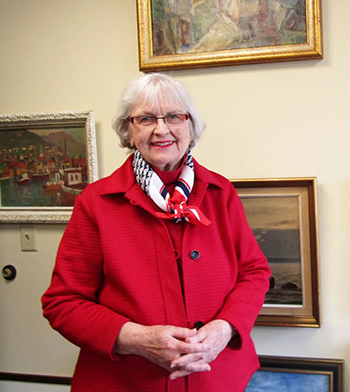
She had gifted most of her estate to organizations that were dear to her during her career and personal life. Mary Jo had grown up in the Bryn Mawr neighborhood, and her family said she loved Wirth Park and the Eloise Butler Wildflower Garden. Although we did not know her, she was familiar with the Friends’ mission of educating the public and supporting the Wildflower Garden, and she wanted to provide for the continuity of that mission.
Other organizations that she connected with also benefited, such as the University of Minnesota Occupational Therapy Program and the Mayo Clinic, where she was one of the developers of the occupational therapy program in Rochester.
When Mary Jo retired from her professional career, she founded Norway Art in Minneapolis in 1979 and kept that going until her death on September 15, 2023.
The estate distribution was received this year; the Friends will use it to provide ongoing support for the Wildflower Garden. ❖
by Gary Bebeau, Friends Treasurer.
Garden visits become useful statistics
When visiting the Wildfllower Garden, you may have stopped at the kiosk at the main entrance gate and picked up a sheet with photos of currently blooming flowers. You may have also noticed the volunteer docent making a hash mark on a clipboard. The volunteer was recording “visitor interactions” and visitor comments. Might we learn something from that clipboard? Your roving Garden statistician took a look at it and discovered that, indeed, there was valuable information to be gleaned.
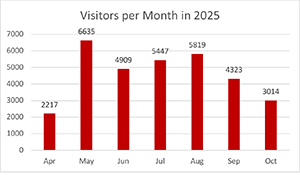
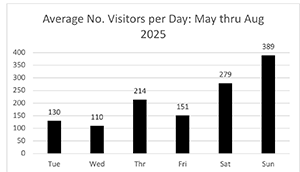
The chart of visitors/per month tells you the busiest months, and the chart of daily activity tells you the busiest days. May has historically been the busiest month, with the slowest months bookmarking the season. In April, we are not yet sure spring has arrived, and in October, winter’s almost here. Wait for May - now there’s a month! Oh, to be in Minnesota when May is here! Spring beauties! All those trilliums! It’s no secret that the weekends are the busiest - most of us have to work other days. Thursday has the benefit of daytime Storytime and evening hours. What happened to Monday? Oh yeah, Garden’s not open that day.
But we are undercounting. We miss those entering and leaving via the north gate, and those entering the Garden between 7:30 am and 10 am before the kiosk is staffed. When many visitors come at the same time, it is not possible to count them all. Note that these statistics are 2025 data. Susan Wilkins says that 2026 is even busier!
Thanks to Bruce Jarvis for the facts and charts, and apologies to Robert Browning.
Notes For and About Our Donors and Volunteers
Annual Support information about:
1. Becoming an Annual Supporter of the Friends
2. Renewing your Annual Support
Can be found on our Website Donate & Support page.
Information on paying by check or by credit card is found there also.
For changes to your mailing address or email address, please use the annual support link on our contacts page or mail to: Friends of the Wild Flower Garden, Donor Support, P.O. Box 3793, Minneapolis, MN 55403-0793.
Other means of Support
Want to honor someone?
A gift in their honor can simply be a means of honoring a living person or some group
or
use this as an alternate type gift for a holiday, a birthday, an anniversary, etc. We will notify them of your gift and of how they will receive our newsletter and other communications for the year ahead. This will introduce them to the Friends and to the Garden. Use the mail-in form or the credit card link on our website 'Donate & Support' page.
Support Donor List
2025 - - - 2026 to date
A gracious THANK YOU to all who responded to our Celebrate 175 campaign to raise funds for the Council Ring section of the Eloise Butler Wildflower Garden Entrance Renovation Project. This project is underway with completion in 2027.
A complete list of donors to this project and all donors in 2026 Y-T-D is at this link:
2026 to date
Memorials/In-honor-of Received
October 2025 to September 2026
for Elizabeth Anderson from Heather Clark
for Shirley Pyle from Joan Haldeman
for Hanna Semba from Nancy Berlin, Richard Semba
for Mary Lou Thoreson from Louise Fawcett & Varick Olson, Gail Hasz, Mike & Lori Schaefer Family Fund, Curtis Stofferahn, Pam Thoreson.
for Diane Walker from Jean Martell
for Helen Wright King from Susan Kornhaber
IHO Rosie Bloom-Oconnell from Heather Maestas
IHO Mary Bolla from Nancy Gibson and Ron Sternal
IHO Carolyn Brunelle from Chris Brunelle
IHO Jeffery Ducharme from Janet Anderson and Tim Sutton
IHO Bruce Jarvis from John Barber
IHO Jennifer Olson from Peggy Korsmo-Kennon
IHO Jim Proctor from Joy Davis
IHO Pam Weiner from Deborah Boehm
To make a donation go to our 'Donate & Support' page.
Board of directors positions
The Friends Board of Directors can use your talents! We are an all-volunteer board that meets several time per year and if you have an interest in the Wildflower Garden and in helping support it and our mission of educating the public about the Garden and the natural world get more details by sending an email to the "requests" link on our contacts page.
You can also support our program by buying a plant identification book.
 Do you have our Plant Identification Guide? The 3rd edition has 1,950 photos of the 787 flowering plants, trees and the ferns of the Eloise Butler Wildflower Garden including many that are of historic interest. Four hundred of these books have been sold, so why not get yours!
From a buyer in New Hampshire: What a terrific collection of photos. I’m sure this guide will be a great compliment to other guides I have. From Minnesota: I love the book and will cherish it for many years to come. Credit card order or use the mail order form, both on our website here.

Sign up for Twigs & Branches: A monthly email update from the Friends containing news from the Garden and relevant MPRB projects, as well as access to website content featuring short articles from our Board and membership. These articles are written to highlight connections of the plants, history and lore of the Eloise Butler Wildflower Garden with different time frames or outside events.
If you already are signed up for our emails, you should be getting these. If you are not here's the link to the sign-up form. The form also allows you to sign up for our Fringed Gentian™ announcements and for the Friends Greater Eloise Stewards emails.
The Fringed Gentian™
is published for supporters of the Friends and the Eloise Butler Wildflower Garden.
The Fringed Gentian™ Staff:
Colin Bartol, editor.
Betsy Kerr, copy editor.
Bob Ambler, staff photographer.
Karen Kopacz, fringed gentian illustration.
The Friends
Officers/Directors
Support the Friends

Print version
Downloadable PDF of printed copy
Return to OR Learn more:
An Autumn Note
The Autumn wood the aster knows,
The empty nest, the wind that grieves,
The sunlight breaking thro’ the shade,
The squirrel chattering overhead,
The timid rabbit’s lighter tread
Among the rustling leaves.
And still beside the shadowy glen
She holds the color of the skies;
Along the purpling wayside steep
She hangs her fringes passing deep,
And meadows drowned in happy sleep
Are lit by starry eyes!
[Dora Read Goodale]
Below: An autumn meadowhawk rests on the late flowering New England aster. Photo Bob Ambler.
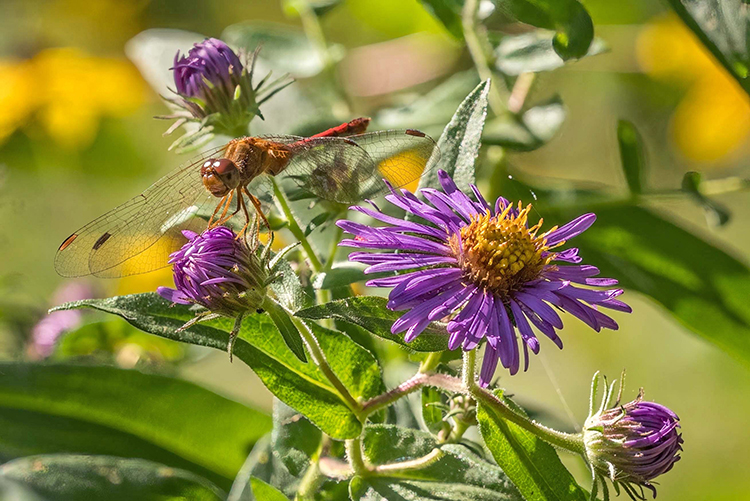
*Photo note: Photos with a “CC” credit are used for educational purposes under Creative Commons license. Learn about this at https://creativecommons.org/share-your-work/cclicenses/
©2026 Friends of the Wildflower Garden, Inc. www.friendsofeloisebutler.org.
Non-commercial reproduction of this material is allowed without prior permission but only with the acknowledgment to Friends of the Wildflower Garden, Inc., the author and the photographer.