

A PUBLICATION OF FRIENDS OF THE WILDFLOWER GARDEN, INC.
Summer 2026
Volume 74 No 2
Print version
Downloadable version of printed copy
Quick Links to this Issue
Feature articles
What's going on!
Friends President's Letter - celebrating 175 years
Wildflower Garden is home to dozens of rare MN-native plants
Lady slipper rescue
A special gift to the Wildflower Garden
by Nicolas Purcell
Thanks to a generous donation made by Carol and Larry Wade, the Eloise Butler Wildflower Garden is home to several new lady’s slipper orchids. The Wades contacted Garden curator Susan Wilkins in early 2025 to inquire about gifting plants to the Garden. They had decided that they would be selling their house in spring of 2026, which would also mean leaving behind their extensive garden.
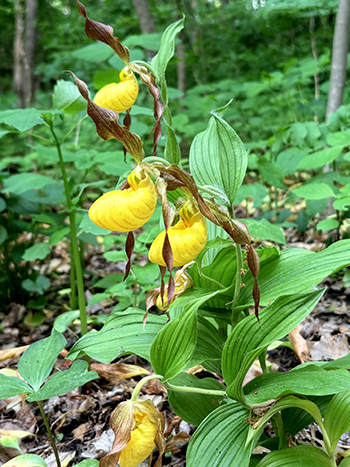
Uncertain about what fate their garden would face after the sale, they reached out to see if the Wildflower Garden could provide a refuge for some of their more treasured native plants, including showy lady’s slipper (Cypripedium reginae), greater yellow lady’s slipper (Cypripedium parviflorum var. pubescens), and lesser yellow lady’s slipper (Cypripedium parviflorum var. makasin).
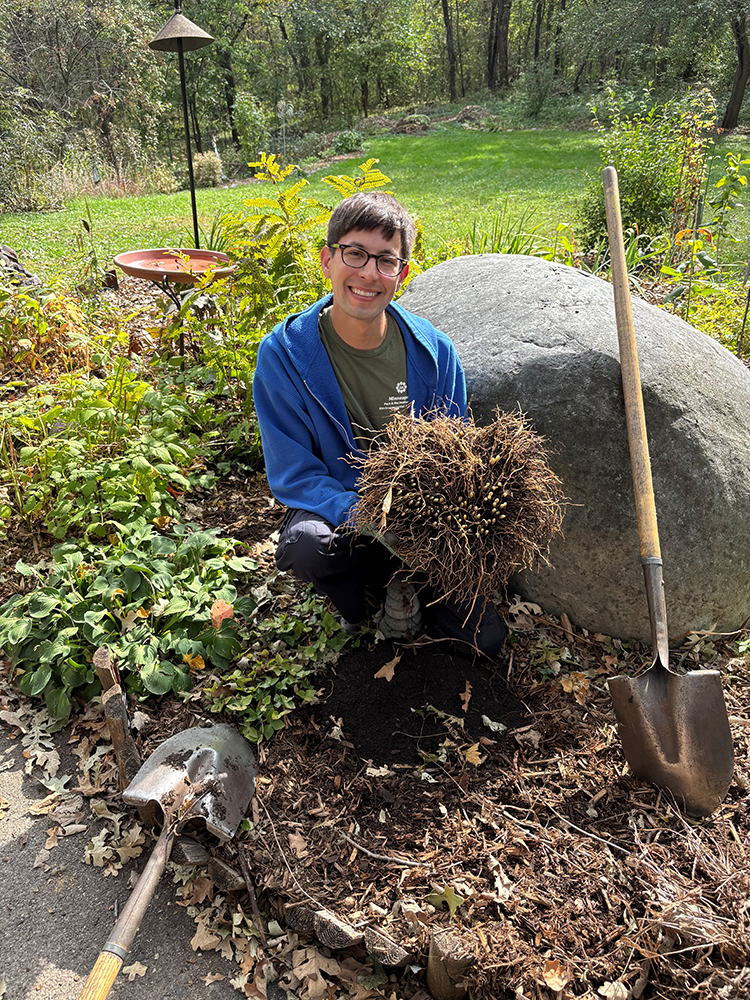
In Fall 2025, Susan and Nicholas Purcell, the Garden’s Natural Specialist, traveled to the Wades’ garden in Minnetonka to dig up the orchids and bring them back to the Garden. There, they were warmly greeted by Carol and Larry and directed to the orchids, which were situated under a high canopy of oak trees in a beautiful and wonderfully maintained garden. The orchids were carefully dug up and their roots given a preliminary rinse at the Wades’ before being transported to the Wildflower Garden.
EBWG Natural Resources Specialist Nicolas Purcell with one of the lady slipper clumps. Photo MPRB.
Back at the Garden, the roots of the lady’s slippers were meticulously but gently washed of all soil and debris to prevent the introduction of any pests such as jumping worms into the Garden. The root systems of the orchids were rather shallow, but quite wide. The density of the root balls required the use of a wood skewer to remove all the non-plant material from the nooks and crannies. The fibrous roots themselves somewhat resembled the noodles in ramen and, to the nose of the Natural Resources Specialist, had an odor reminiscent of an animal pelt. After washing was complete, the lady’s slippers were ready for planting.
The two showy lady’s slippers donated by the Wades were planted near the others already existing in the Garden, by the gathering area of the boardwalk. Two of the greater yellow lady’s-slippers were planted near the south end of Violet Way on the east side of the trail, while the other was planted under the canopy of the large red oak with the three stones at its base on the east end of the upland area of the garden. The lesser yellow lady’s-slippers were planted by the bench near Plum Point.
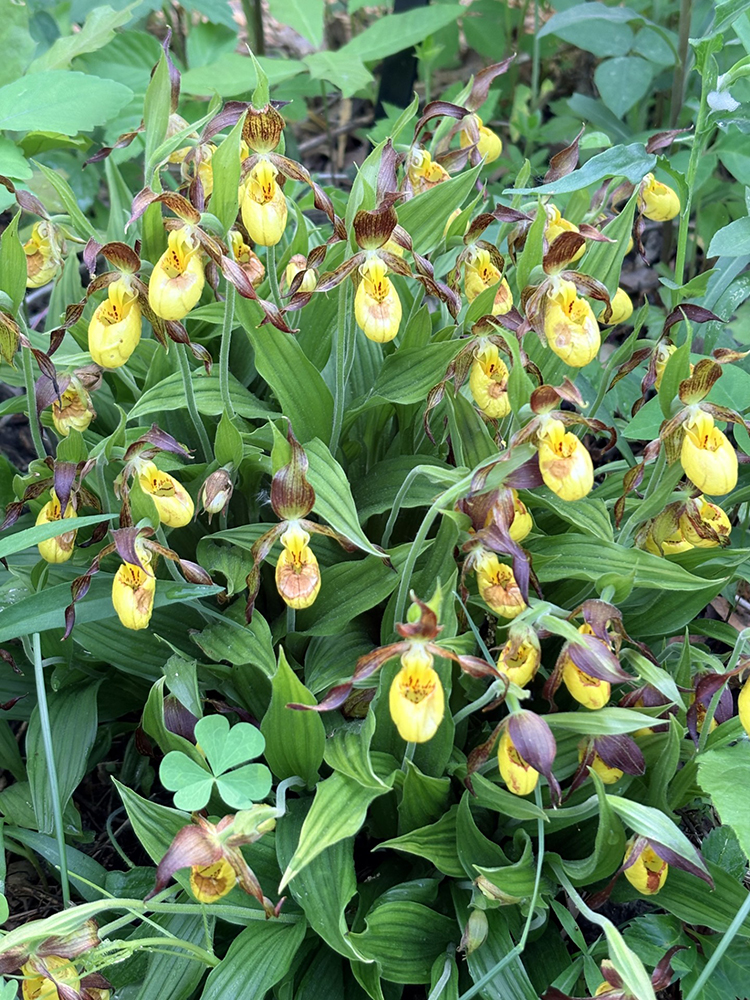
While time will tell how these new inhabitants will fare in the long run, so far the signs are encouraging. One of the two showy lady’s slippers emerged this spring, and in early June, it was the first showy lady’s slipper to bloom in the Garden, producing two flowers. All of the yellow lady’s slippers sent up shoots and flowered in May. Among the two clumps along Violet Way, there were a total of fourteen flowers, while the clump near the three stones in the upland contributed nine beautiful blossoms. The lesser yellow lady’s slippers in particular put on a lovely display. Garden staff counted approximately sixty of their exquisite, diminutive flowers. At the time of planting, all of the orchids were accessioned into Hortis, the Garden’s plant records database. Those entries were updated this spring to reflect the current status of the plants, and staff will continue to track and record the lady’s slippers’ progress there for, we hope, many years to come. ❖
Below: One of the transplanted clumps of the yellow lady's slipper, smaller version, Cypripedium parviflorum var. makasin
Nicolas Purcell is Natural Resources Specialist at Eloise Butler Wildflower Garden.
A birthday gift for Eloise
Celebrating 175!
by Joelle Hoeft
This summer, we celebrate a remarkable milestone: the 175th birthday of Eloise Butler, the pioneering botanist, teacher, and conservationist whose vision gave us the nation's first public wildflower garden.
For more than a century, visitors have found beauty, inspiration, learning, and connection in the Eloise Butler Wildflower Garden and Bird Sanctuary. Now, as we honor Eloise's legacy, we have a unique opportunity to invest in the Garden's future.
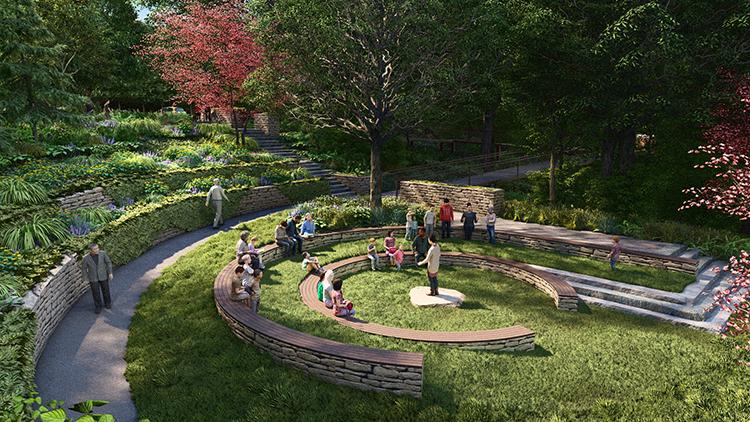
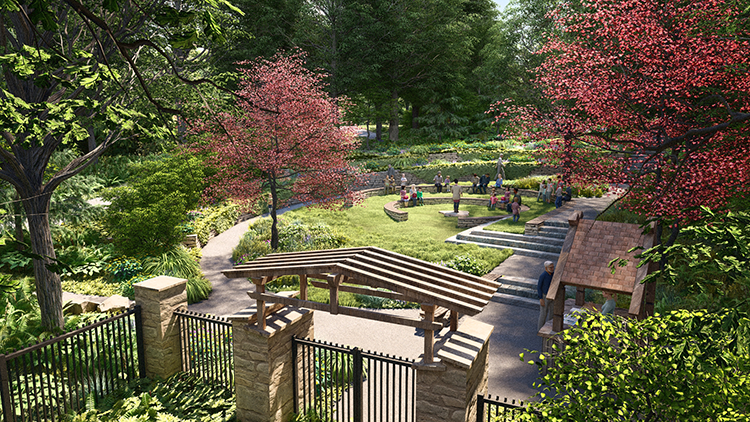
This fall, the Minneapolis Park & Recreation Board will begin the first phase of a renovation of the Garden's entrance. A centerpiece of the project is a new Council Ring—a welcoming gathering space where visitors can connect with one another, participate in educational programs, and begin their Garden experience.
Below and at bottom of text: Artist renderings of the proposed council ring for the Garden entrance project. Drawings courtesy MPRB. [Larger version of drawing.]
To help make this vision a reality, the Friends of the Wildflower Garden has launched a Celebrate 175! campaign.
Our goal is simple and meaningful: raise $175,000 in honor of Eloise's 175th birthday.
We are excited to share that generous donors have already helped us secure $100,000, leaving $75,000 still to raise by November 2026. Your gift will help advance the Council Ring and front entrance project – phase one of a multi-year effort.
Every gift matters. Whether you give $25, $175, or $5,000, your support helps ensure that the Garden remains a place of beauty, discovery, and belonging for generations to come. Help us raise the remaining $75,000 and make this milestone year one to remember.
As we celebrate Eloise Butler's 175th birthday, we invite you to be part of the Garden's next chapter. Together, we can ensure that this beloved sanctuary continues to inspire wonder, foster biodiversity, and connect people with nature for generations to come.
To make a gift or learn more, visit our council ring page or scan the QR code.

If you have questions about the Friends' fundraising efforts or would like to help us reach new supporters, please contact Joelle Hoeft, chair of the Friends Fundraising Committee, at this email address.
Wild beauty
The botanical art of the Eloise Butler Wildflower Garden Florilegium
by Jennifer Olson
The word is from Latin flos (flower) and legere (to gather). Botanical art illustrations date back to the 15th century when books of herbals were printed describing culinary and medicinal uses of plants. In 1613, Hortus Eystettensis, an illustrated herbal of 367 copperplate engravings illustrating the Bishop’s botanical garden in Eichstatt, was published by Basilius Besler (1593-1629), apothecary, botanist and etcher. Many wealthy landowners began hiring artists to create florilegia for a visual record of their garden plants.
Other famous florilegia include Joseph Banks’ scientific expedition to the South Pacific on HMS Endeavor with Captain James Cook, 1768-1771. Seven hundred forty-three specimens were illustrated by Sydney Parkinson, also on board the Endeavor, and these illustrations were finally published in 35 volumes between 1980 and 1990. The University of Minnesota’s Andersen Horticultural Library owns a copy of HM King Charles III’s Highgrove Florilegium and his commissioned Transylvania Florilegium, 124 watercolors of the flora of meadows and uplands.
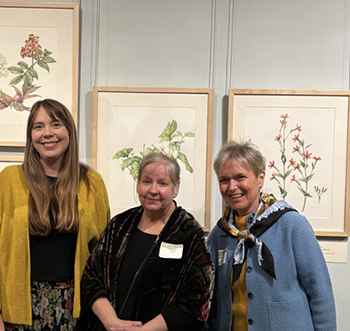
Marilyn Garber founded The Minnesota School of Botanical Art in 2001. Within ten years, she had identified gifted students to create a florilegium; but what location? A frequent visitor to the Eloise Butler Wildflower Garden, Marilyn “had a fondness for native plants and Eloise’s own story”. She chose the oldest public wildflower garden in the United States for her Florilegium. “I want this little jewel of a place to be remembered five hundred years from now.” This became the third American Florilegium, following the Brooklyn Botanic Garden and the Filoli Florilegium in Woodside, California.
Susan Wilkins suggested 110 plants which represented the meadow, woodland, and wetland, and a few more that were important to Eloise Butler. The challenge was that no plants could be removed from the garden. Starting in 2011, more than 50 artists adopted a plant and researched its botanical history.
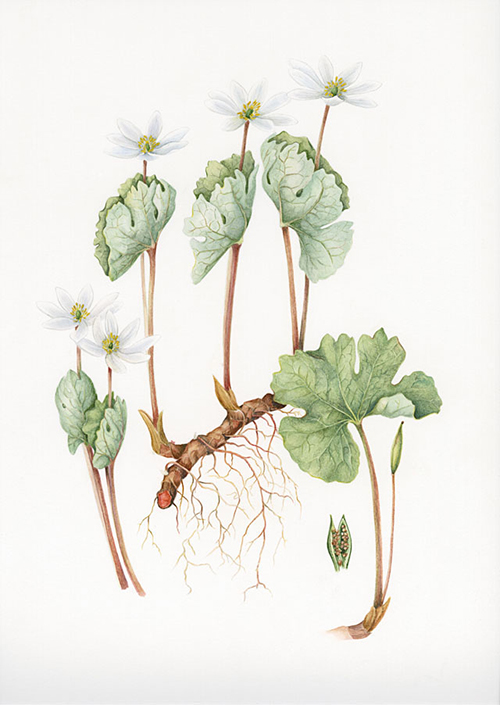
The illustration was to be scientifically accurate in a naturalistic style within its individual habitat. When the flower bloomed, the artist was there photographing and sketching it. If the bloom was missed or didn’t produce pods the way it usually does, the work needed to wait a year. Marilyn painted the Bloodroot and found a friend who pulled up their garden Bloodroot so she could observe and paint the red roots. The botanical art was created by the artist, then donated to the Eloise Butler Wildflower Garden and transferred to the Minneapolis Park and Recreation Board Archives.
Although some of the Florilegium paintings have been displayed in the past and most recently at MIA in 2024 and 2026, the final compendium of 111 watercolor illustrations created by the artists of the Minnesota School of Botanical Art will be at the Bell Museum from September 26, 2026 until January 3, 2027. You are welcome to attend a reception at the Bell honoring the artists on Wednesday, October 7, 2-3:30.
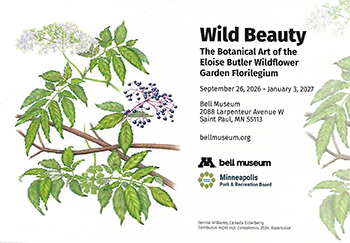
Congratulations to Marilyn Garber and the Florilegium Artists!
Jennifer Olson. ❖
History of the Eloise Butler Wildflower Garden Florilegium.
Jennifer Olson president of the Fiends of the Wildflower Garden.
President's Greeting
Celebrating 175!
by Jennifer Olson
2026 is the 175th anniversary of Eloise Butler’s birth! She was born August 3, 1851 in Appleton, Maine. Her chief childhood amusement was roaming the woods near the Butlers’ farm. Her aunt taught “Elo” and her sister Cora to know the plants.

Above: Panorama of Appleton Ridge today at Appleton Maine where the Butler farm was located, showing the hills, woods and lakes of Eloise Butler's childhood. Photos - by Martha Hellander.
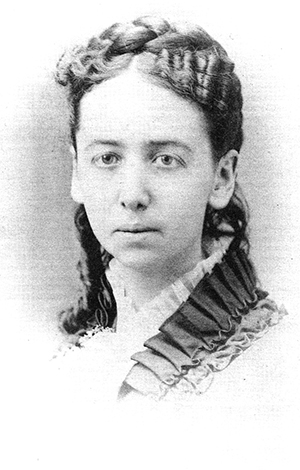
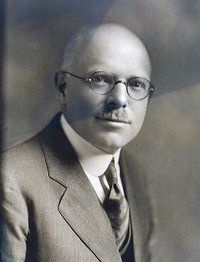
Her teacher at Eastern State Normal School, Helen Coffin, had studied under Louis Agassiz, marine biologist at Harvard, and was an early advocate of science education for women. Although no correspondence exists between Coffin and Eloise, it is likely that Coffin was influential in Eloise’s focus on botany. Eloise taught school briefly in Indiana and arrived in Minneapolis alone in 1874. She immediately found a position teaching 7th through 9th graders Latin and Greek, but by 1878 she was teaching high school botany.

In the 19th century, botanizing became a popular leisure activity – walking in nature, searching and identifying plants. Eloise botanized along the Mississippi River and near Minnehaha Park with groups of friends. She took University of Minnesota summer school classes and learned to use a microscope to study algae.

When the streetcar reached what is now Theodore Wirth Park, Eloise and her fellow Minneapolis female botany teachers (The Big Four) would botanize there. They petitioned the MPRB for a botanical garden, which included signatures from University President Northrup and two botany professors, Josephine Tilden and Fredric Butters, both of whom had been high school students of Eloise Butler.
Eloise Butler was passionate and knowledgeable about plants. She had a vision of a Garden to showcase native plants of Minnesota. We are the recipients of her vision and her dedication to creating this wonderful oasis that we share with thousands of visitors 119 years later.
Mark your calendars for Thursday, November 5, 2026 for a celebration of Eloise Butler at the Bell Museum and an opportunity to visit the Eloise Butler Wildflower Florilegium! Tickets will be sold beginning in September on the Friends’ website. ❖
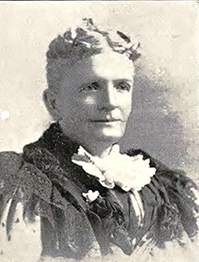
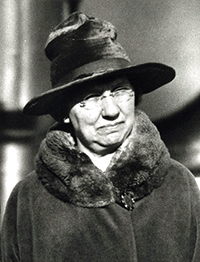
Below: Eloise Butler's teacher and two of her students.
Archive of previous President's Letters.
Wildflower Garden is home to dozens of rare MN-native plant species
from Garden Curator Susan Wilkins
At the heart of the Eloise Butler Wildflower Garden’s mission is the deliberate and attentive stewardship of Minnesota’s native plant species. Every day, Garden staff work to plant, monitor, manage, and protect rare native species, ensuring these important plants continue to thrive for generations to come.
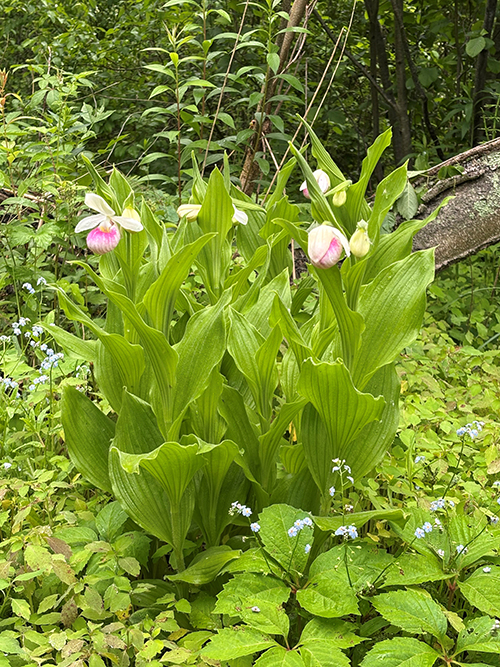
Today, the Garden is home to more than 640 native plant species. While some have grown here naturally, most were thoughtfully introduced over the past 119 years to create one of the region’s most significant collections of Minnesota native plants. Maintaining this living collection is an ongoing effort, with staff continuously caring for and expanding the abundance of plants and the diversity of plant species found throughout the Garden.
Among these native plants are 23 species listed by the Minnesota Department of Natural Resources as endangered, threatened, or of special concern. Remarkably, 21 of those species were introduced by Garden staff as part of dedicated conservation efforts. The collection also includes numerous rare and difficult-to-find plants that are not listed, including four native orchid species.
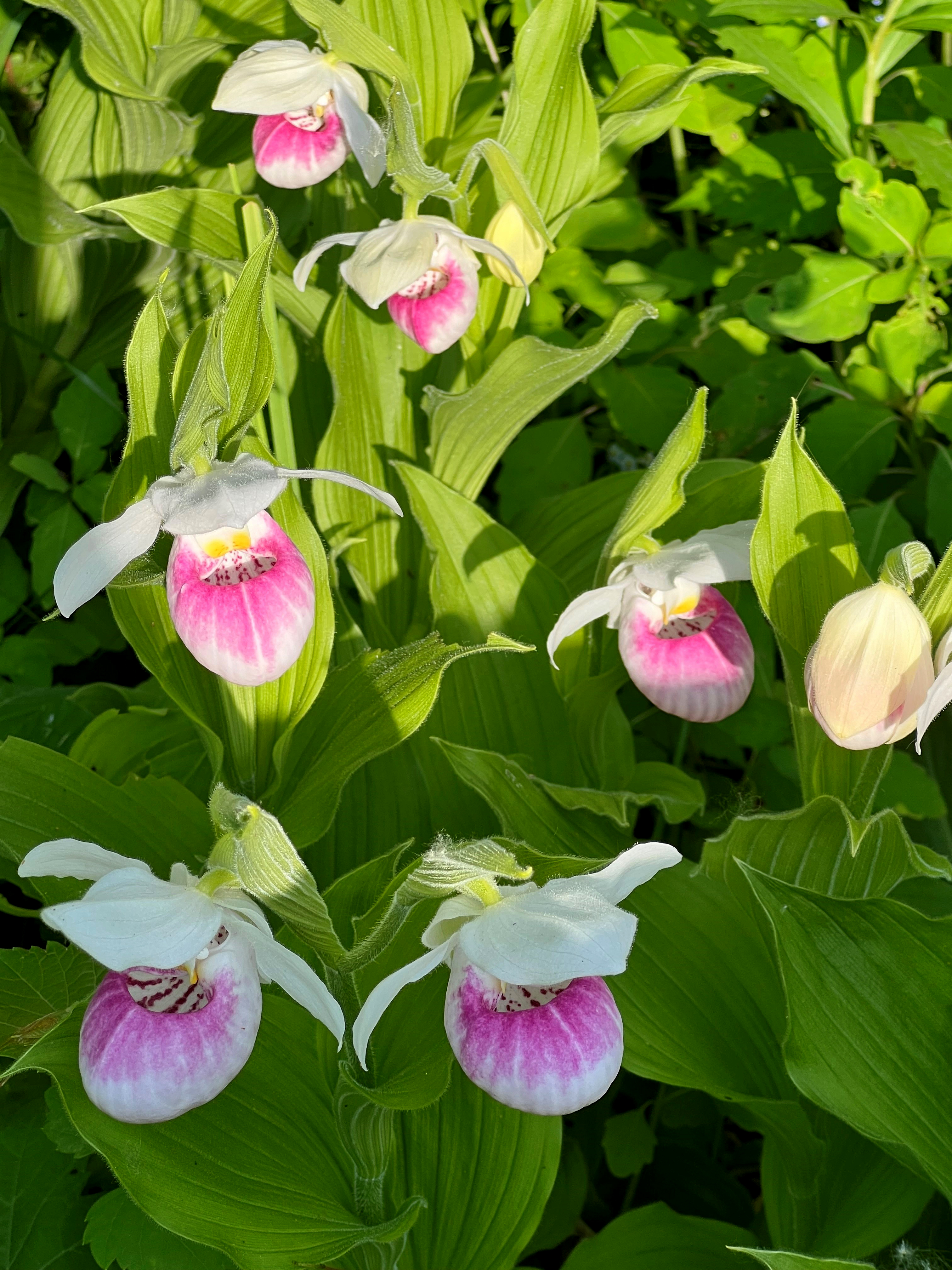
One of the Garden’s most beloved plants is the showy lady’s slipper, Minnesota’s state flower. These striking native orchids bloom each June, drawing visitors from across the Twin Cities and beyond. Although showy lady’s slippers originally grew in the Garden, the plants visitors see today have been added over time to help maintain a healthy and sustainable population.
The Garden is one of only two public locations in the Twin Cities where visitors can reliably view showy lady’s slippers in bloom. The other is the Minnesota Landscape Arboretum in Chaska.
Over the past two decades, I have had opportunities to lead efforts to rescue and relocate showy lady’s slipper plants in partnership with the Minnesota Department of Transportation and numerous conservation organizations and individuals.
In recent years, the Minnesota Landscape Arboretum’s Plant Conservation Program has also contributed dozens of showy lady’s slippers through its Minnesota native orchid propagation program. A separate native orchid donation was also received last year. All of these recent additions have been carefully accessioned, planted, and monitored by the Garden’s seasonal Natural Resources Specialist Nicholas Purcell. Please read the wonderful article written by Nicholas in this Fringed Gentian™ edition to learn more about this work.
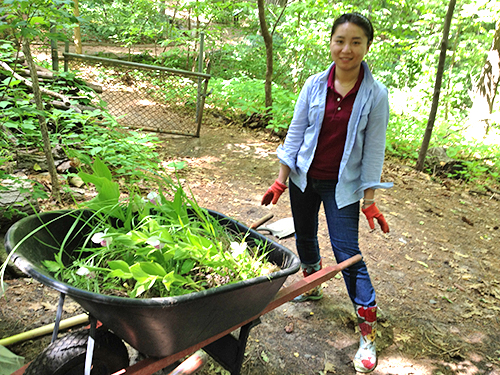
These partnerships play an important role in preserving Minnesota’s botanical richness and ensuring the long-term survival of this iconic species. We are deeply grateful to our conservation partners for their ongoing support and collaboration.
If you have never experienced showy lady’s slippers in bloom or if you have visited every year for decades, plan a visit to the Garden in mid-June to see them. The flowers can be found along the boardwalk trail known as Lady Slipper Lane, where their vibrant pink and white blossoms create one of the Garden’s most anticipated seasonal displays.
As Eloise Butler wrote with adoration: “The showy lady slipper. . . is the crowning glory of the Preserve. It is endemic and has increased from year to year, so that there are now hundreds in large clumps making vistas of beauty through a marsh containing a few scattered tamaracks. Frequently a stalk bears two flowers and often three. . .Visitors are so enraptured with the display in my garden that they feel like falling on their knees to worship them. This Cypripedium is. . .considered by many the most beautiful flower in the world.”
Follow @ebwgmpls on Facebook and Instagram for updates on bloom timing and other Garden news.❖ Susan
Susan Wilkins is Curator of the Eloise Butler Wildflower Garden. Her article and the photos of the Garden are presented courtesy of the Minneapolis Park & Recreation Board.
Read Susan's previous letters here.
Injured Scarlet Tanager at the Garden 5/16/2026
by Jennifer Olson
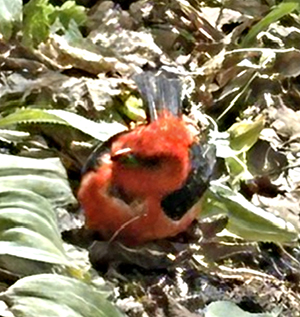
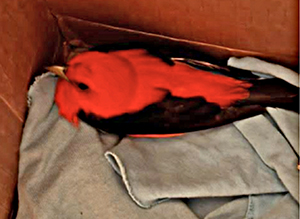
A visitor reported there was an injured male Scarlet Tanager hopping around on Lady’s Slipper Lane with an apparent left wing injury. While waiting for the naturalist to find a net and a box, it began to climb up a tree, probably instinct to avoid predators. Unfortunately, at twenty feet, it fell to the ground. It now had a gash on its chest but was able to move around. Lisset, the naturalist, came with a net and lifted it into the cardboard box with a soft cloth.
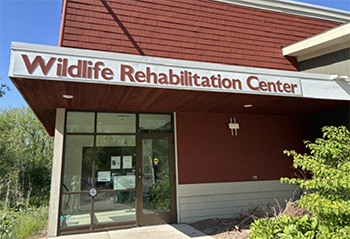
I drove my patient to the Wildlife Rehabilitation Center in Roseville, where the bird was admitted. I needed to fill out the necessary paperwork and left him with the WRC. I emailed them three days later for an update. He had a laceration on his neck and a fractured right scapula. The break was severe as the bones were shattered and not repairable. This bird would not fly again – no more could be done.
How did this beautiful tanager get hurt? Wing injuries often come from hitting cars or windows or attacks by a predator. Was he chased by a hawk and escaped? Did he collide with a tree?
This is a useful website: https://birdscollector.com/common-bird-injuries-how-to-prevent-them/.
Jennifer Olson
News and Notes
Greater Eloise Stewards Activities
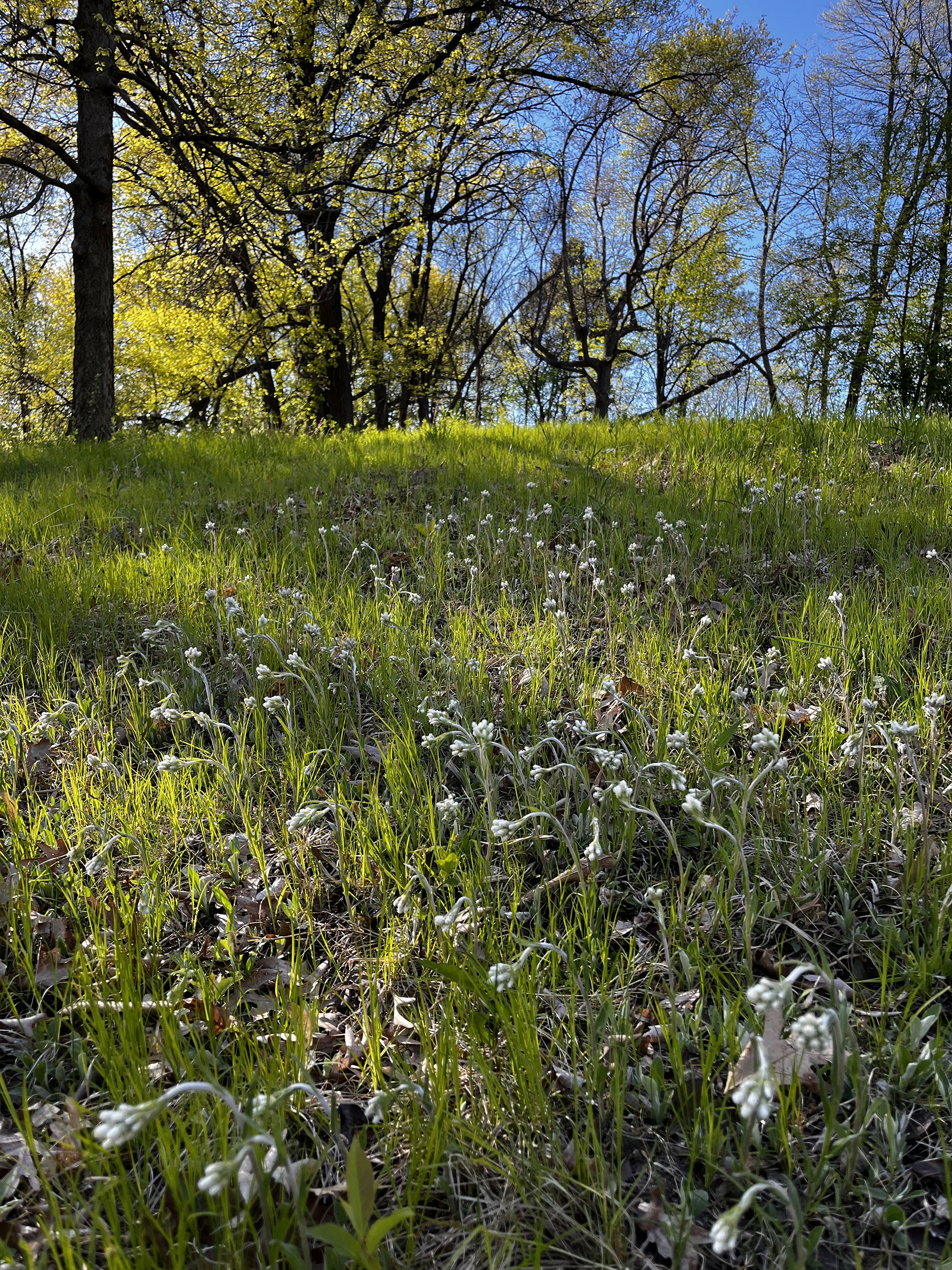
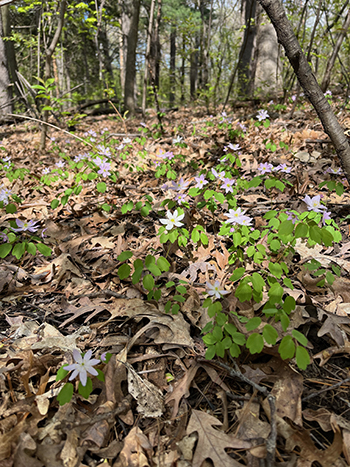
Update on the oak savanna: In an area that would be full of garlic mustard and little else if the volunteers of the Greater Eloise Stewards had not weeded it out, these photos show pussytoes and rue anemones thriving this past spring. The photos showcase the effects of the restoration work of GES over the past years in the oak savanna east and southeast of the Wildflower Garden fence.
Notes For and About Our Donors and Volunteers
Annual Support information about:
1. Becoming an Annual Supporter of the Friends
2. Renewing your Annual Support
Can be found on our Website Donate & Support page.
Information on paying by check or by credit card is found there also.
For changes to your mailing address or email address, please use the annual support link on our contacts page or mail to: Friends of the Wild Flower Garden, Donor Support, P.O. Box 3793, Minneapolis, MN 55403-0793.
Other means of Support
Want to honor someone?
A gift in their honor can simply be a means of honoring a living person or some group
or
use this as an alternate type gift for a holiday, a birthday, an anniversary, etc. We will notify them of your gift and of how they will receive our newsletter and other communications for the year ahead. This will introduce them to the Friends and to the Garden. Use the mail-in form or the credit card link on our website 'Donate & Support' page.
Support Donor List
2025 - - - 2026 to date
New donors since last issue
Margeret Bicek, Nicolas Erickson, Mary Metzger, Marlys Nitchals, Ashely Olson, John Schaffenberger, Annemarie Smithmier, Sophia Sorboro, Jennifer Vogel, Sara White, Wild Ones.
Memorials Received
Memorials/In-honor-of Received
October 2025 to June 2026
for Elizabeth Anderson from Heather Clark
for Mary Lou Thoreson from Louise Fawcett & Varick Olson, Gail Hasz, Mike & Lori Schaefer Family Fund, Curtis Stofferahn, Pam Thoreson.
for Helen Wright King from Susan Kornhaber
IHO Carolyn Brunelle from Chris Brunelle
IHO Jennifer Olson from Peggy Korsmo-Kennon
All 2025 memorials - - - 2026 memorials to date
To make a donation go to our 'Donate & Support' page.
Board of directors positions
The Friends Board of Directors can use your talents! We are an all-volunteer board that meets several time per year and if you have an interest in the Wildflower Garden and in helping support it and our mission of educating the public about the Garden and the natural world get more details by sending an email to the "requests" link on our contacts page.
You can also support our program by buying a plant identification book.
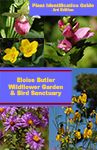 Do you have our Plant Identification Guide? The 3rd edition has 1,950 photos of the 787 flowering plants, trees and the ferns of the Eloise Butler Wildflower Garden including many that are of historic interest. Four hundred of these books have been sold, so why not get yours!
From a buyer in New Hampshire: What a terrific collection of photos. I’m sure this guide will be a great compliment to other guides I have. From Minnesota: I love the book and will cherish it for many years to come. Credit card order or use the mail order form, both on our website here.

Sign up for Twigs & Branches: A monthly email update from the Friends containing news from the Garden and relevant MPRB projects, as well as access to website content featuring short articles from our Board and membership. These articles are written to highlight connections of the plants, history and lore of the Eloise Butler Wildflower Garden with different time frames or outside events.
If you already are signed up for our emails, you should be getting these. If you are not here's the link to the sign-up form. The form also allows you to sign up for our Fringed Gentian™ announcements and for the Friends Greater Eloise Stewards emails.
The Fringed Gentian™
is published for supporters of the Friends and the Eloise Butler Wildflower Garden.
The Fringed Gentian™ Staff:
Colin Bartol, editor.
Betsy Kerr, copy editor.
Bob Ambler, staff photographer.
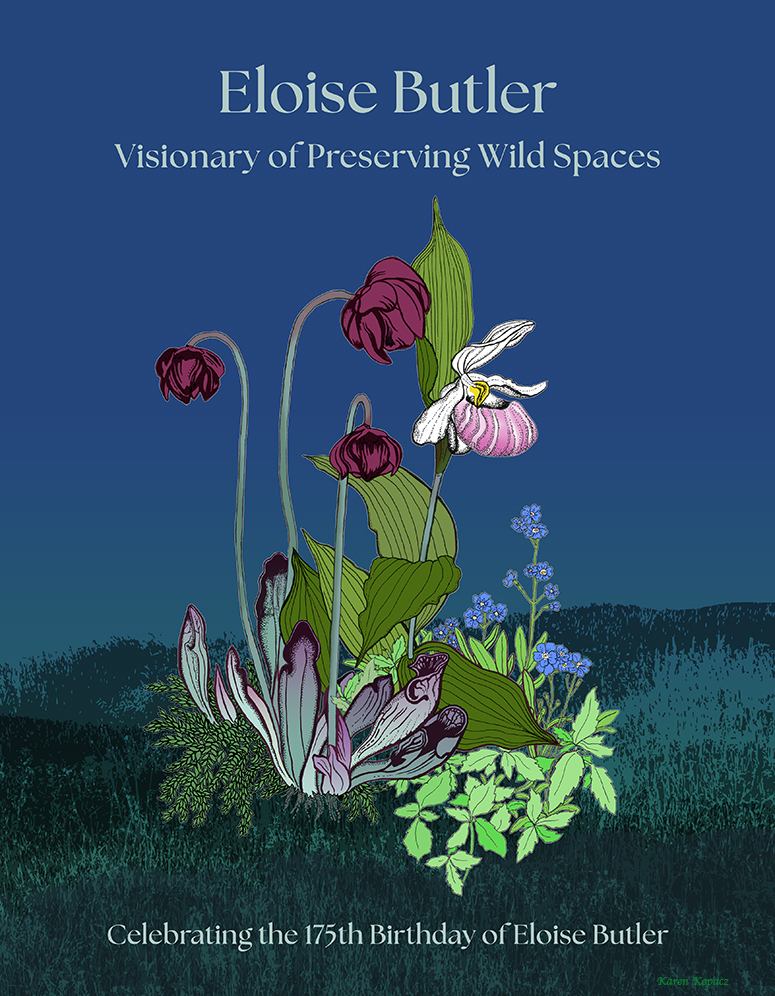
Karen Kopacz, fringed gentian illustration and 175th anniversary illustration.
The Friends
Officers/Directors
Support the Friends

Print version
Downloadable version of printed copy
Return to OR Learn more:
Summer note
A Something in a summer’s day,
As slow her flambeaux burn away,
Which solemnizes me.
A something in a summer’s noon,—
An azure depth, a wordless tune,
Transcending ecstasy.
And still within a summer’s night
A something so transporting bright,
I clap my hands to see;
Then veil my too inspecting face,
Lest such a subtle, shimmering grace
Flutter too far for me.
[Emily Dickinson]
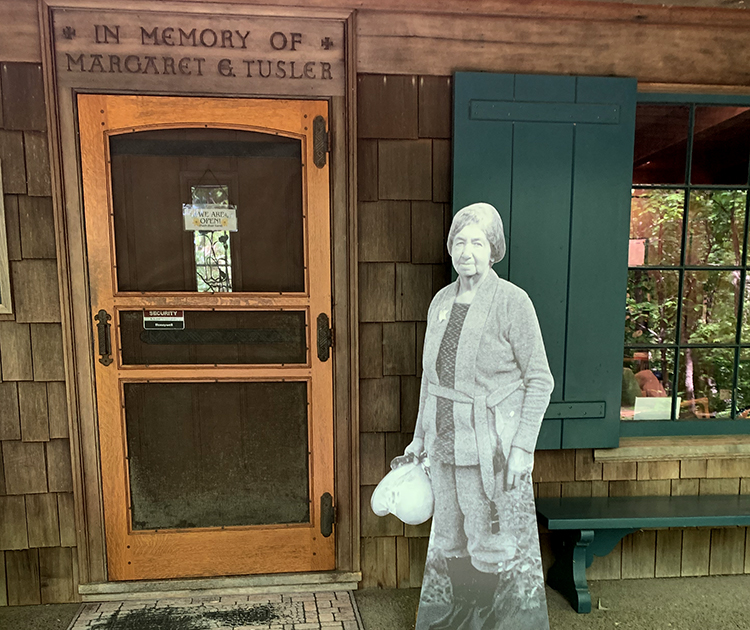
Below: This summer Eloise Butler greets visitors at the entrance to the Martha Crone Shelter. Photo G D Bebeau.
©2026 Friends of the Wildflower Garden, Inc. www.friendsofeloisebutler.org.
Non-commercial reproduction of this material is allowed without prior permission but only with the acknowledgment to Friends of the Wildflower Garden, Inc., the author and the photographer.