Common Winter Birds of Central Minnesota

Here are photos of 18 common birds that you will see in central Minnesota in the winter months.
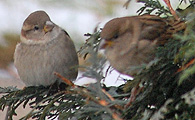
Left the familiar Black-capped Chickadee (Poecile atricapilla) and right, a group of House Sparrows (Passer domesticus), which you will typically see moving around in flocks and mobbing the bird feeders.


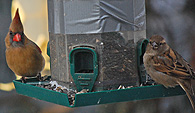
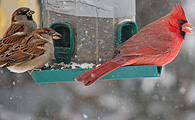
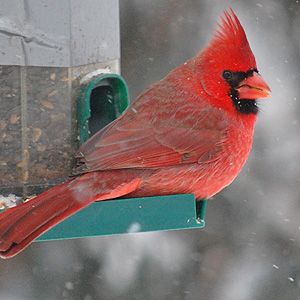
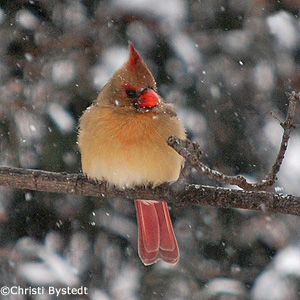
The Northern Cardinals (Cardinalis cardinalis) keep to their territory all winter, but are willing to let other Cardinals into the vicinity to eat. The females tend to be more tolerant of other females than males are of other males. Left - the male; right - the female. Occasionally you might get to see a leucistic individual such as the female in the 3rd photo.

American goldfinches (Carduelis tristis) in their winter garb. Left - the male; right - the female.


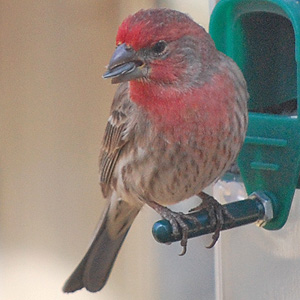
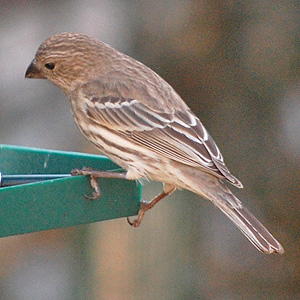
House finches (Carpodacus mexicanus) will winter over also. Like all the above birds, sunflower oil seeds are the favorite. Left - the male; right - the female. Like sparrows they tend to feed in flocks.
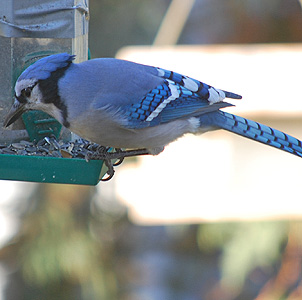
Left: A female Purple Finch (Carpodacus purpureus). The white eyebrow makes an identification difference with the female House Finch. Right: While not normally a visitor to the seed feeder, this easily identified Blue Jay (Cyanocitta cristata) gives it a try.

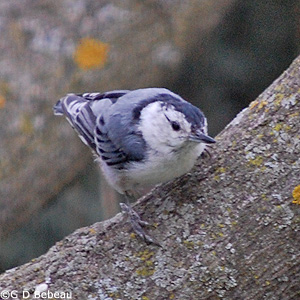
Another winter resident is the White-breasted Nuthatch (Sitta carolinenis), seen on the right in the pose which you will typically see- moving down a tree trunk from top to bottom searching for insects and eggs hidden in the bark.

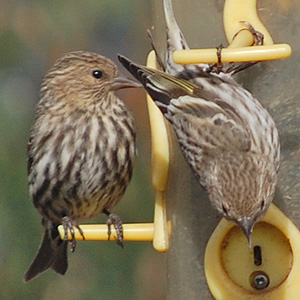
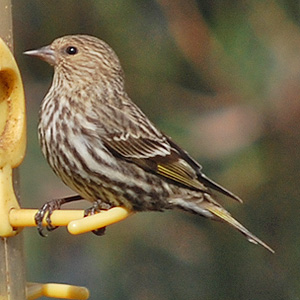
Arrivals from further north during our winter are these birds. Left: A pair of Pine Siskins (Carduelis pinus) with one doing a "Look at me Ma!". This bird repeatedly would eat thistle seeds upside down. Male and female look the same. They are similar to the Purple Finch but lack the Finches' eyebrow, have a smaller bill, more heavily striped chest and yellow bars on the wings.
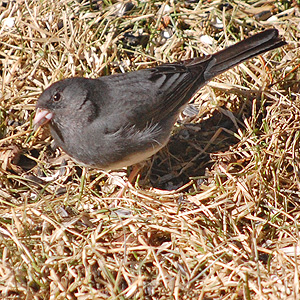
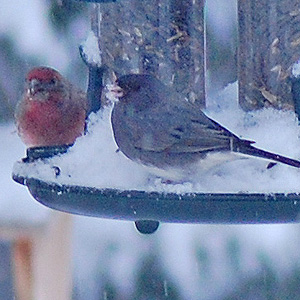
Another arrival from further north during the winter is the Dark-eyed Junco (Junco hyemalis). Right: A male that is wintering in the south of the state, sharing the feeder with a House finch during a heavy snowfall. While normally a ground feeder as the one on the left is doing, the Junco will hit the feeder when the seeds on the ground are covered
The Red-bellied Woodpecker (Melanerpes carolinus) is around all winter but we seldom see it, so when we do it's a visual treat. The name refers to the rosy patch on its breast. It is also called "Zebra-backed".


Left: The more common woodpecker to see in the winter is the Downy Woodpecker (Picoides pubescens) . The male at left has the red patch on the back of the neck. Less seldom seen is the Hairy Woodpecker (Picoides villosus), of which the male also has a red head patch. At right is a composite photo showing the size difference between the female downy on the far right and the larger female Hairy feeding on the left side of the feeder.

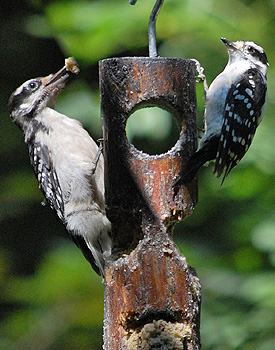
The Pileated Woodpecker is a year-round resident but is more scarce, often heard but not seen. This large bird can make quite a racket hammering away on a dead branch. The 2nd photo shows the bird on the same feeder post as the photos up above, so you can get a size comparison. 2nd photo courtesy of Melissa Hansen.


The American crow (Corvus brachyrhynchos), inhabits almost all of North America. It is a member of the corvid family, with all black plumage and iridescent feathers, distinguished from its larger cousin the raven by smaller size and a less pronounced beak. Crows are intelligent birds that learn how to use simple tools to obtain food, can distinguish colors, and demonstrate a certain amount of patience when given the classic marshmallow test.


Photo @Justin Flint CC BY-SA 4.0
Stretching the area of central Minnesota a bit, but in the very northern parts, where the northern forests begin, you may encounter the Raven (Corvus corax), where it is a year around resident. Males, females and juveniles look the same. The bird is larger than its cousin the American Crow, which lacks the throat patch of feathers.


More easily seen in winter than in summer are the local owls who actually begin nesting in February. Both of these owls have long been known in and in the vicinity of the Eloise Butler Wildflower Garden and Bird Sanctuary.
First photo - Barred owl (Strix varia), photo © Christopher Boser. Second photo- Great horned owl (Bubo virginianus), photo ©Roy Larsen.


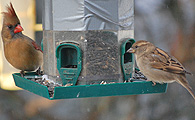
Below: When heavy weather comes, birds are very active at the feeders. The Cardinals don't mind the sparrows and the sparrows are not at all intimidated by the larger birds.

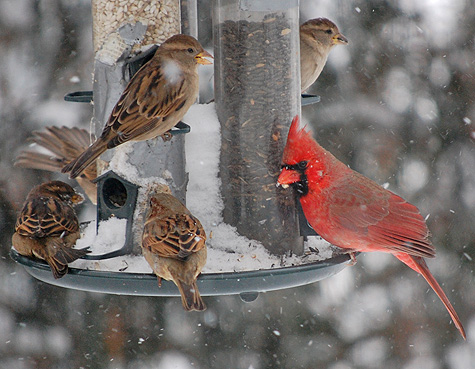
Below are some winter bird conversations overheard!