President's Letters 2026
As published in The Fringed Gentian™.
Spring 2026
Volume 74, No. 1
Dear Friends,

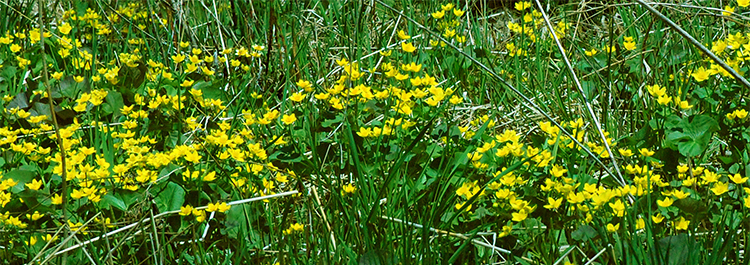
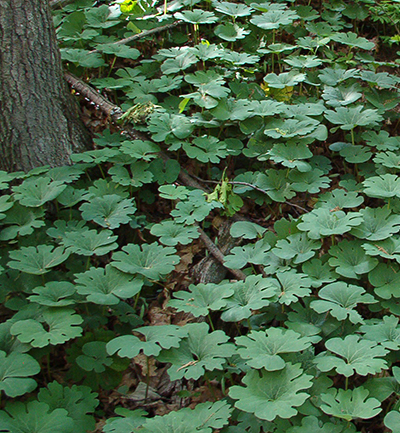
Always at this time of year, we look forward to the Garden opening. Eloise wrote in 1928: "On the afternoon of April 2, one or two buds of hepatica showed color and the venturesome flowers of snow trillium began to open. Shortly afterward, the next great pageant was staged – literally acres of lowland bespread with a cloth of gold – marsh marigold." Of the five Early Bloomers (the two above plus false rue anemone and skunk cabbage), the fifth is my favorite: bloodroot. Unlike the others, its beautiful leaves are visible through the summer.

2026 is the 175th anniversary of the birth of Eloise Butler. She arrived in Minneapolis in 1874 from Indiana, where she had moved from her home in Maine with her parents. Immediately, she was hired at Central School and taught Latin and Greek to 7th and 8th graders. In her free time, she was botanizing along the Mississippi River – learning the plants. In 1878, she transferred to Central High School, teaching history and botany for 24 years, and then taught botany at South High School until she retired in 1911. Two of her high school students, Josephine Tilden and Frederic Butters, became botany professors at the University of Minnesota, and a third, Clinton Odell, founded the Friends of the Wildflower Garden in 1952.
In 1889, the Park Board (MPRB) purchased land between what is now Glenwood Avenue and I-394 and from Birch Lake to Xerxes Avenue. For years it was undisturbed, "an oasis of wild plants, birds, and animals, bogs, and wooded hills." Eloise’s Big Four – the four female botany teachers, one for each Minneapolis High School – would botanize there and bring students to experience nature. In 1907, the Big Four presented a petition to the MPRB: "a desire to preserve intact all the wild and natural features of the place; as a natural botanic garden". It was signed by all four high school principals, the University of Minnesota’s President Northrop, Josephine Tilden (Eloise’s former student who became the first woman science professor at the University), C.O. Rosendahl, Chair of the University’s Botany Department, and other science staff. On April 15, 1907, the request was granted for a three-acre garden.
Below: Three students of Eloise Butler.
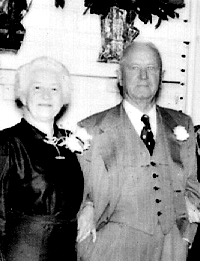
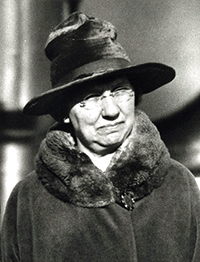
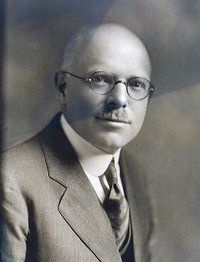
The teachers began a census of the indigenous flora: sixteen species of trees, twenty-eight species of shrubs, ten species of ferns, and seventy-six species of wildflowers. When Eloise returned from her summer in Massachusetts, she counted fifty more species. Planting continued until November 5th with yellow lady slippers, pitcher plants, royal, maidenhair, and sensitive ferns, Dutchman’s breeches, wild ginger, skunk cabbage, and tall blazing stars, mostly dug up from local wild areas.
The Big Four wrote a full-page article on "The Importance of Botany…the only class about life/living: physiology, nutrition, and reproduction", which was published in the Minneapolis Journal in May 1909. While curating the Garden, Eloise was actively promoting the Garden – writing newspaper articles, speaking, and giving tours in the Garden.
By 1910 Eloise was no longer using her teacher’s summer vacation to go to the East Coast but was dedicating her time to the Natural Botanical Garden. In 1911, the Minneapolis Women’s Club petitioned the Park Board to hire a funded curator for the Garden and asked that Eloise Butler be appointed. Butler’s vision was to showcase all the flora of Minnesota. In 1929, the Park Board formally changed the name of the Garden to the Eloise Butler Wild Flower Garden, although she referred to it as the Native Plant Preserve or Wild Garden until she died.
Eloise enjoyed the poet William Wordsworth, who wrote about nature, both its wildness and its cultivation. In 1990 when the Friends funded a new Front Gate, they selected the Wordsworth quote “Let Nature Be Your Teacher” for the wooden top to honor Eloise Butler.
I am grateful for her vision and unfailing dedication to creating this wild botanic garden for all of us to enjoy 119 years later. We will be celebrating her all year!
Happy Spring, Jennifer Olson President of the Friends of the Wildflower Garden
Below: The arbor about the Wildflower Garden's front gate with the phrase from Wordsworth.

Photos G D Bebeau
Summer 2026
Volume 74, No. 2
Celebrating 175!
2026 is the 175th anniversary of Eloise Butler’s birth! She was born August 3, 1851 in Appleton, Maine. Her chief childhood amusement was roaming the woods near the Butlers’ farm. Her aunt taught “Elo” and her sister Cora to know the plants.

Above: Panorama of Appleton Ridge today at Appleton Maine where the Butler farm was located, showing the hills, woods and lakes of Eloise Butler's childhood. Photos - by Martha Hellander.
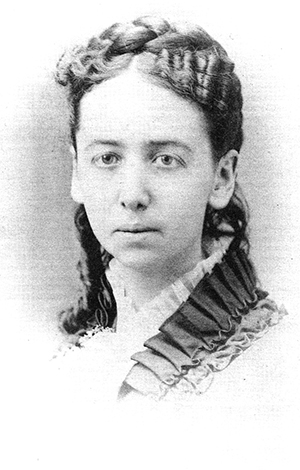
Her teacher at Eastern State Normal School, Helen Coffin, had studied under Louis Agassiz, marine biologist at Harvard, and was an early advocate of science education for women. Although no correspondence exists between Coffin and Eloise, it is likely that Coffin was influential in Eloise’s focus on botany. Eloise taught school briefly in Indiana and arrived in Minneapolis alone in 1874. She immediately found a position teaching 7th through 9th graders Latin and Greek, but by 1878 she was teaching high school botany.

In the 19th century, botanizing became a popular leisure activity – walking in nature, searching and identifying plants. Eloise botanized along the Mississippi River and near Minnehaha Park with groups of friends. She took University of Minnesota summer school classes and learned to use a microscope to study algae.

When the streetcar reached what is now Theodore Wirth Park, Eloise and her fellow Minneapolis female botany teachers (The Big Four) would botanize there. They petitioned the MPRB for a botanical garden, which included signatures from University President Northrup and two botany professors, Josephine Tilden and Fredric Butters, both of whom had been high school students of Eloise Butler.
Eloise Butler was passionate and knowledgeable about plants. She had a vision of a Garden to showcase native plants of Minnesota. We are the recipients of her vision and her dedication to creating this wonderful oasis that we share with thousands of visitors 119 years later.
Mark your calendars for Thursday, November 5, 2026 for a celebration of Eloise Butler at the Bell Museum and an opportunity to visit the Eloise Butler Wildflower Florilegium! Tickets will be sold beginning in September on the Friends’ website. ❖
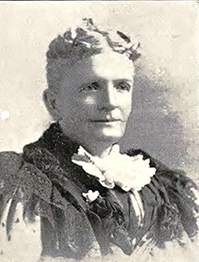
Below: Eloise Butler's teacher and two of her students.
Fall 2026
Volume 74, No. 3